


Breathing in a bright citrus aroma can shift the mood of a space almost instantly. The scent feels fresh, lively, and full of energy, like sunlight breaking through morning air. May Chang essential oil carries this quality with a distinctiveness all its own: a lemony brilliance that feels both refreshing and gently comforting, with a tropical warmth and subtle floral undertone that sets it firmly apart from the lemon oils most people are familiar with.

CHECK OUT OUR BLOG
Natural Male Enhancement Tinctures: Tongkat Ali, Epimedium, And Kakanga Compared
A guide to natural male enhancement tinctures, comparing tongkat ali, epimedium, and kakanga root benefits, with insight from Essential Oil Wizardry.
Kanna Tincture vs. Kanna Resin: Which Format Is Right For You?
A guide to kanna tincture vs kanna resin, covering effects, dosing, and how to choose the best kanna format for your practice, from Essential Oil Wizardry.
Rose Absolute vs. Rose Otto: Bulgarian Rose And Rose Bourbon Absolute Compared
A guide to rose absolute, comparing Bulgarian rose absolute and rose bourbon absolute for perfume and ritual use — plus how rose otto (a steam-distilled essential oil) differs — with insight from Essential Oil Wizardry.
What Is May Chang? The Botanical Story Behind Litsea Cubeba
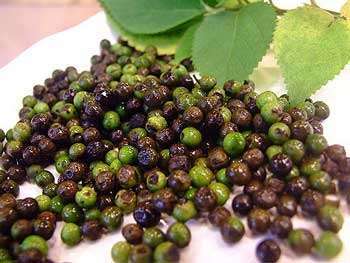
May Chang is the common name for the essential oil extracted from the small, pepper-like fruits of the Litsea cubeba tree, a plant that’s predominant in the tropical and subtropical regions of India, Southeast Asia, southern China, Taiwan, and Japan (Kamle et al., 2019). At Essential Oil Wizardry, we source our May Chang organically from Belgium, Vietnam, and Brazil.
The Litsea cubeba tree belongs to the same botanical family as bay laurel and cinnamon, which hints at its layered aromatic complexity. We produce this essential oil through steam distillation of the tiny fruits, yielding an essence that feels crisp, pleasant, and unmistakably citrus. Though technically, May Chang is not a true citrus oil. It comes from the fruit of a laurel-family tree, not from a citrus peel. This distinction presents itself aromatically. May Chang’s scent is warmer and rounder than cold-pressed lemon, with what Dr. Nick describes as a tropical lime character and a floral pepper undertone that makes it immediately interesting in a blend.
Litsea cubeba is widely grown and selected for its high citral content, which can reach 60–90% when extracted from fresh fruits (Kamle et al., 2019). This is the same aromatic compound responsible for the lemony quality in lemongrass and lemon myrtle. It’s commonly used in industrial perfumery and flavoring, but its full botanical personality tends to be best experienced in a high-quality, organically sourced essential oil rather than a synthetic citral isolate. To understand more about how essential oils like May Chang are made and their biological role, check out our guide on: What are essential oils?
May Chang Essential Oil Benefits In Daily Aromatic Rituals
For most people, the primary entry point into Litsea cubeba essential oil benefits will be diffusion, and it’s an excellent starting point. A few drops in a diffuser during the morning creates a garden-fresh, inspiring atmosphere before the day begins. The aroma transforms a neutral space into something that feels intentional and welcoming.
May Chang also works well in smaller, more personal aromatic moments: a brief inhalation from cupped palms, a few drops on a tissue or personal inhaler, or as part of a ritual that marks the transition from one part of the day to another. These small, repeated practices are often where the gentler aspects of an uplifting oil accumulate and unfold, not in a single session, but over time and consistent use. For more on building sustainable aromatic practices into daily life, our guide on how to use essential oils covers application methods from diffusion to topical use.
Litsea Essential Oil Benefits: What Makes May Chang Worth Knowing
The most immediate Litsea essential oil benefits are aromatic. The scent of May Chang is uplifting and rejuvenating in a way that feels almost paradoxical: it energizes without agitating, and softens the body without dulling awareness. Dr. Nick has observed this dual quality firsthand, noting that diffusing Litsea cubeba in an environment simultaneously raises the vibration of a space and helps unwind the body.
This combination is part of what makes May Chang particularly useful in everyday aromatherapy. Where some citrus oils tip toward sharp and stimulating, May Chang finds a gentler register. It brightens without demanding attention. Beyond its aromatic presence, May Chang has a wide range of traditional and practical applications that experienced essential oil users will appreciate.
- Culinary: Litsea cubeba is genuinely delicious in food. Dr. Nick recommends it infused into raw honey (try a few drops per cup of honey to taste), added to ginger root tea as a digestive and flavor enhancer, or drizzled into salad dressings and savory dishes where it contributes notes similar to tropical lime. A little goes a long way; the flavor is quite concentrated!
- Skin Care: When properly diluted (always below 2.5% for topical use; May Chang may be irritating at higher concentrations), it may support the cleansing of pores and is sometimes used as part of a simple acne-focused face oil. A blend of 7–12 drops in 1 oz of jojoba, applied twice daily, is Dr. Nick’s suggested starting point. As with bergamot and lemon, avoid applying to skin exposed to direct sunlight due to potential photosensitivity.
- Household Cleaning: Combined with tea tree oil in a water-based spray, May Chang makes a pleasantly aromatic surface disinfectant. It may also be used as an insect repellent.
- Energetic Cleansing: In Dr. Nick’s personal practice, a few drops applied to the fingertips and snapped around the body’s auric field offer an energetic reset. This practice is rooted in the oil’s traditional reputation for purifying and recentering the energetic environment.
Meet The Oils: May Chang And Its Companions
Essential oils each carry their own personality, from bright and sharp to soft and floral. When brought together thoughtfully, they create blends that feel dynamic, balanced, and easy to work with across different settings. May Chang sits at the center, but it shines even more when paired with complementary oils that expand its range and round out its character.
Litsea Cubeba Essential Oil: The Star Of The Show
Our Litsea Cubeba Essential Oil is organically sourced and steam-distilled from the fruit of the Litsea cubeba tree. In Dr. Nick’s words, it’s a must-have for any essential oil collection. It might be less commonly known than lemon or bergamot, but it’s every bit as versatile and arguably more interesting as a multifaceted fragrance.
Its aromatic profile, sweet, warm, tropical lime with a floral pepper undertone, makes it a great connector in blends, bridging citrus, floral, and herbaceous notes with ease. It’s equally at home in a morning diffuser blend, a gourmet kitchen application, or a botanical perfumery project. Keep dilution low for topical use, and avoid sun-exposed skin after application.
Lemon Oil: Tangy, Classic, And Handy
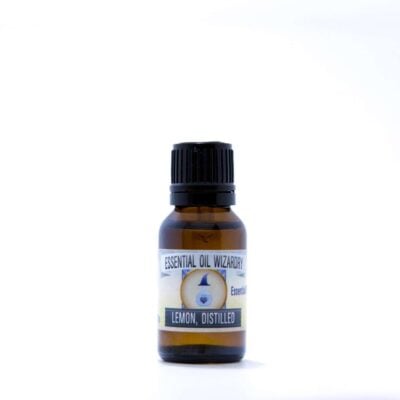
Lemon oil is one of the most versatile botanicals in any collection, and Dr. Nick’s relationship with it goes back to his very first set of therapeutic oils. Organic and hydrodistilled from South African Citrus limon, Essential Oil Wizardry’s Lemon Oil carries a tart, cheery clarity that’s immediately recognizable. In a blend with May Chang, lemon contributes a sharper, more assertive citrus character that May Chang’s warmth softens and rounds. Together they create a blend that’s energizing without being jarring, and deeply citrus-forward without feeling one-dimensional.
Beyond aromatherapy, Lemon Oil earns its keep across a remarkable range of uses: infused into beverages and morning water for digestive support, added to cleaning solutions and dish sponges for natural cleansing action, and even applied to leather for conditioning and shine. Dr. Nick particularly enjoys it vaporized, describing the experience as a “jolt of lemon zest ringing the internal body, clearing the throat and saturating the senses.”
A quick note on photosensitivity: Our Lemon Oil is hydrodistilled, which carries a lower sunburn risk than cold-pressed/expressed lemon oils, but caution is still advisable.
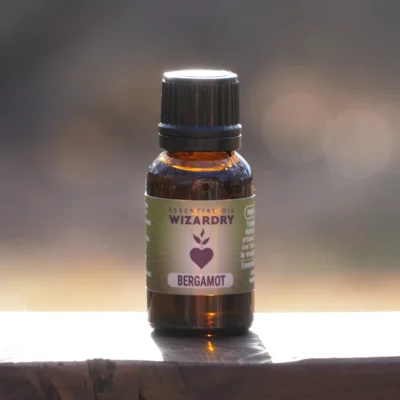
Bergamot Essential Oil: Regal, Floral, And Balancing
Our Bergamot Essential Oil is the most complex of the three. Organic and cold-pressed (or steam distilled) from South African or Italian Citrus bergamia, its scent is crisp but with a distinctly floral, almost tea-like elegance. This is fitting, given its famous role as the defining flavor of Earl Grey tea.
In a citrus blend with May Chang, bergamot functions as the balancing middle note: less sharp than lemon, less floral than May Chang, and uniquely suited to uniting the two. The result is a layered, sophisticated citrus experience that feels lively and calming in the same breath. Dr. Nick describes bergamot as “light and luminous,” an oil that boosts mood through the aroma alone.
As with the oils above, please do not apply bergamot topically to skin exposed to sunlight or UV light. Use it aromatically or reserve topical application for evening use.
Litsea Cubeba Uses In Botanical Blending
May Chang’s greatest strength as a blending oil is its ability to connect different aromatic families without dominating them. It cheers up floral oils, mellows out herbal blends, adds vibrancy to woody or resinous notes, and harmonizes beautifully with other citrus oils, all without overreaching.
An Easy Yet Zingy Blend
For diffusion, a straightforward starting point is to combine 3 drops of May Chang with 2 drops of lemon oil and 2 drops of bergamot. This combination layers the tropical warmth of May Chang with lemon’s crisp edge and bergamot’s floral brightness. The result is an encouraging morning or midday blend for focus, mood, or simply refreshing a stale space. Adjust ratios based on personal preference. Please keep in mind that bergamot and lemon are both assertive; May Chang is the connector that keeps the mixture from feeling too flat or harsh.
Beyond Citrus: What Litsea Cubeba Blends Well With
May Chang’s blending range extends well beyond the citrus family. It pairs beautifully with lavender, rose, geranium, jasmine, ylang ylang, clary sage, ginger, rosemary, and basil, making it a useful bridge between aromatic families in more complex botanical perfumery or therapeutic blends. If you’re interested in learning more about supportive botanicals, our guide on essential oils for calming and stress relief covers complementary pairings and practices.
Storing May Chang Essential Oil To Preserve Its Vibrancy
Citrus oils are among the more volatile in any collection, and their refreshing, fragrant character is the first thing to soften when storage is neglected. A few consistent habits protect their radiance:
- Seal Tightly After Every Use: Air exposure is the primary driver of oxidation in high-citral oils like May Chang.
- Store In Dark Glass: At Essential Oil Wizardry, we immediately place our imported products into an amber glass as a baseline industry standard. Please keep your oils in a cool cabinet or drawer rather than on open shelving to help keep the temperature stable.
- Avoid Heat: Warm environments accelerate chemical breakdown. Don’t store your essential oils near windows, stoves, or in vehicles.
Like all Essential Oil Wizardry products, May Chang and its citrus companions are best used within 2–5 years when stored properly. An oxidized citrus oil will typically lose its zing and take on a duller, sometimes slightly sharp quality. Citrus oils may yield the shorter side of this ideal usage range – Your nose will tell you!
Frequently Asked Questions About May Chang Essential Oil
What is May Chang essential oil used for?
It’s most commonly used for aromatic uplifting. It may be diffused to brighten environments, support a happier mood, and encourage calm in the body. It’s also used culinarily as a flavor enhancer, topically in diluted skin care preparations, and as part of household cleaning formulas.
Is May Chang essential oil the same as Litsea cubeba?
Yes. May Chang is the common name for the essential oil extracted from the fruits of Litsea cubeba. The terms are often used interchangeably.
What makes the Litsea Cubeba essential oil different from lemon oil?
Both are high in citral, but May Chang carries a warmer, rounder, more tropical quality with a floral, peppery undertone that lemon doesn’t have. It blends more easily across aromatic families and is generally smoother in character.
Can May Chang essential oil be applied directly to the skin?
No. It’s highly recommended to dilute it below 2.5% in a carrier oil before topical use. May Chang may cause skin irritation at higher concentrations. It’s also recommended to avoid applying it to sun-exposed skin.
How does May Chang essential oil differ from bergamot and lemon in a blend?
Lemon is the sharpest and most assertive of the three. Bergamot adds floral elegance and calm. As a middle ground, May Chang bridges them. It’s warmer than lemon, brighter than bergamot, and adds a spicy sweetness that rounds the overall composition.
How long does May Chang essential oil last when stored properly?
It can last approximately 2–5 years when kept in a cool, dark place in a tightly sealed dark glass bottle. If the oil loses its bright vibrancy, it might be a sign it’s past its prime!
DISCLAIMER:
The information provided is intended for educational and informational purposes only and reflects historical, cultural, and experiential perspectives. It is not intended to diagnose, treat, cure, or prevent any disease, nor should it be interpreted as medical, legal, or professional advice. Individual experiences may vary. Always use personal discernment and consult a qualified professional when appropriate.
Sources:
- Kamle, M., Mahato, D. K., Lee, K. E., Bajpai, V. K., Gajurel, P. R., Gu, K. S., & Kumar, P. (2019). Ethnopharmacological Properties and Medicinal Uses of Litsea cubeba. Plants (Basel, Switzerland), 8(6), 150. https://doi.org/10.3390/plants8060150