


Key Takeaways
- A Symbol That Has Endured For Millennia: Blue lotus spiritual meaning is rooted in ancient Egyptian and broader cultural traditions where the flower represented renewal, consciousness, and the sacred.
- Meaning And Practice Are Inseparable: The spiritual significance of blue lotus is not a relic of the past. It continues to animate how people work with this plant in ritual and contemplative practice today.
- Intentional Use Honors The Lineage: Approaching blue lotus with awareness of its history deepens the experience and connects personal practice to something much larger.
Some plants carry meaning that outlasts the civilizations that first gave it to them. Blue lotus is one of those plants. Its violet-blue petals have graced temple walls, ceremonial vessels, and sacred offerings for thousands of years, and the meaning woven into those images has not faded. If anything, it has become more resonant as people today seek deeper connection to the natural world and its enduring wisdom.
At Essential Oil Wizardry, we approach blue lotus as a plant of genuine spiritual depth. Founded by a holistic-minded, retired pharmacist, our work is guided by respect for traditional botanical wisdom and a belief that plants carry something real worth honoring. More than 95% of what we carry is organic or wildcrafted, unsprayed, and vibrationally enhanced using energetic tools, ORMUS, and BioGeometry.
In this article, we will cover the ancient symbolism behind blue lotus spiritual meaning, how that meaning has carried forward into modern practice, and how blue lotus ritual can become a meaningful part of your own relationship with this flower.
The Ancient Roots Of Blue Lotus Symbolism
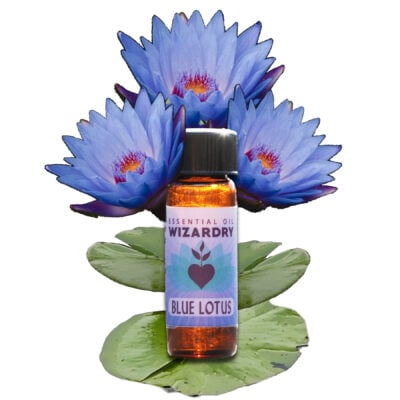
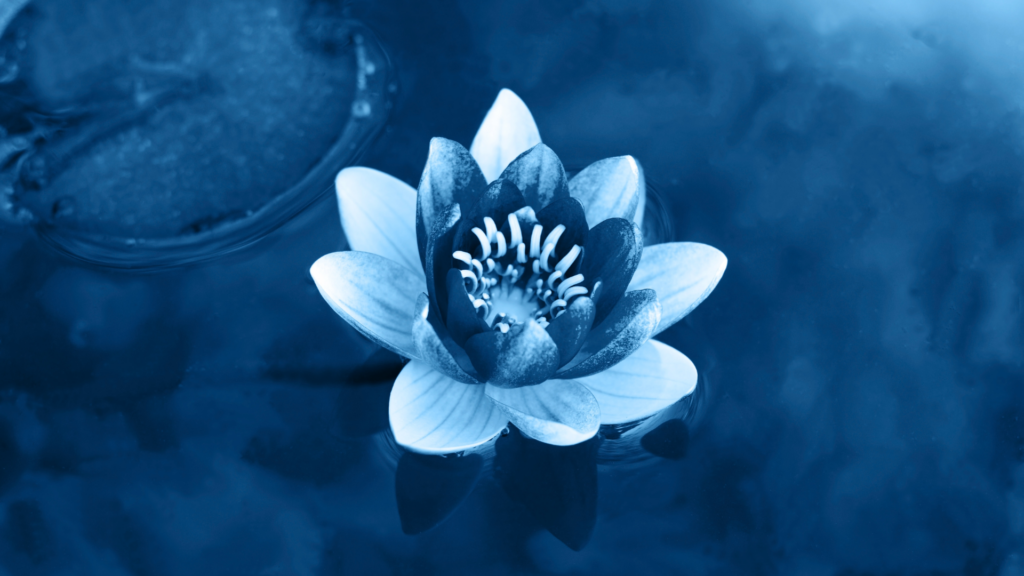
Blue lotus, known botanically as Nymphaea caerulea, was among the most sacred plants in ancient Egyptian culture. Its presence in that civilization was not incidental. The flower’s daily rhythm of opening with the sun and closing at dusk made it a living emblem of the solar cycle, of death and rebirth, of consciousness emerging from darkness into light.
It appeared in tomb paintings, temple reliefs, and royal ceremonies, often depicted in the hands of gods and pharaohs or floating on the waters of ritual pools. This was not decoration. It was theology expressed through botanical form.
Blue Lotus Across Other Spiritual Traditions
Beyond Egypt, the lotus as a broader symbol carried spiritual weight across Hindu, Buddhist, and other traditions, where it represented purity, spiritual unfolding, and the soul’s journey toward awakening. The blue variety, Nymphaea caerulea, held its own distinct place within this broader spiritual lineage, prized for both its visual beauty and its ceremonial character. For a foundational look at the plant itself, our guide on what is blue lotus offers helpful context.
Blue Lotus Ritual In Modern Spiritual Practice
The spiritual meaning of blue lotus has not remained locked in ancient history. It continues to inform how people work with the plant today, in meditation rooms, personal altars, ceremonial gatherings, and quiet evening rituals across many traditions and contexts.
What connects ancient and modern use is an orientation toward presence and inner opening rather than outcome or stimulation. Blue lotus ritual has always been about creating conditions for awareness rather than chasing effect. That quality makes it particularly well-suited to modern contemplative practice, where the cultivation of stillness and receptivity is increasingly valued.
Incorporating Blue Lotus Into Personal Ceremony
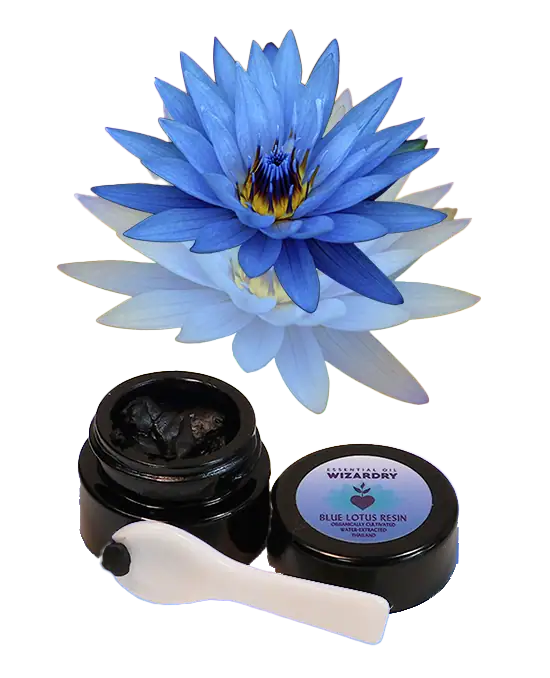
Bringing blue lotus into a personal ceremony can be as simple or as elaborate as your practice calls for. Floating dried Blue Lotus Flower petals in water, diffusing the essential oil before meditation, or preparing a quiet cup of blue lotus tea with full attention are all ways of honoring the plant’s spiritual character in an everyday context.
For those building a broader ceremonial aromatic practice, our collection of ceremonial essential oils offers botanicals that pair naturally with blue lotus in ritual settings. Our guide on essential oils for meditation is also a valuable resource for those weaving aromatic plants into contemplative practice.
Bringing Blue Lotus Flower Uses Into A Living Spiritual Practice
A living spiritual practice with blue lotus is built slowly and tended with care. The plant has never been about dramatic revelation. Its gifts arrive quietly, in the quality of a moment rather than the intensity of an event.
Here are a few ways to weave blue lotus into an ongoing spiritual practice:
- Begin a meditation session by diffusing blue lotus oil (absolute) and setting a clear intention for the practice.
- Keep dried blue lotus petals on a personal altar as a symbol of renewal and inner opening.
- Prepare blue lotus tea (from the flowers) as a weekly ritual of stillness, drinking it without distraction or agenda.
- Pair blue lotus with journaling or reflective writing to deepen the quality of inner inquiry it supports.
- Return to the plant across seasons and notice how your relationship with it changes over time.
Consistency is what transforms a single ritual into a genuine practice, and genuine practice is what allows a plant’s deeper gifts to reveal themselves.
Final Thoughts
Blue lotus spiritual meaning is not a concept to be understood intellectually. It is something to be experienced, slowly, through practice, and with the kind of open attention the plant has always invited. At Essential Oil Wizardry, we carry blue lotus because we believe its invitation is as relevant today as it was in the temples of ancient Egypt.
Our products are best used within 2 to 5 years and stored away from heat, light, and air.
Frequently Asked Questions About Blue Lotus Spiritual Meaning
What does blue lotus symbolize spiritually?
Blue lotus has historically symbolized renewal, the unfolding of consciousness, and the soul’s journey from darkness into light. In ancient Egyptian culture it was closely associated with the solar cycle, rebirth, and the sacred dimension of everyday life.
Why was blue lotus considered sacred in ancient Egypt?
Its daily rhythm of opening with the sun and closing at dusk made it a natural emblem of the solar cycle and the concept of renewal. It appeared throughout Egyptian religious art, ceremony, and funerary practice as a symbol of continuity between life and what lies beyond it.
How is blue lotus used in modern spiritual practice?
Modern practitioners incorporate blue lotus through meditation, personal ritual, ceremonial tea preparation, aromatic diffusion, and altar work. The common thread across all these uses is an orientation toward presence and inner opening rather than stimulation or outcome.
Can blue lotus be used in group ceremony?
Yes. Blue lotus has a long history of communal ceremonial use and lends itself naturally to shared ritual contexts. Its gentle, presence-supporting character makes it a fitting companion for group meditation, circle work, or any gathering oriented toward collective stillness and reflection.
What other botanicals pair well with blue lotus in ritual?
Frankincense, sandalwood, vetiver, and rose are among the botanicals most commonly paired with blue lotus in ceremonial and meditative contexts. Each brings a complementary aromatic quality that deepens the overall ritual atmosphere.
How do I start a blue lotus ritual practice as a beginner?
Starting simply is best. A cup of blue lotus tea prepared and consumed with full attention, or a drop of the tincture, or a few minutes of diffusing the essential oil (absolute) before a quiet sit, is a meaningful beginning. The practice deepens naturally over time through consistent, unhurried engagement with the plant.
DISCLAIMER:
The information provided is intended for educational and informational purposes only and reflects historical, cultural, and experiential perspectives. It is not intended to diagnose, treat, cure, or prevent any disease, nor should it be interpreted as medical, legal, or professional advice. Individual experiences may vary. Always use personal discernment and consult a qualified professional when appropriate.
Sources:
- Manniche, L. (1989). An Ancient Egyptian Herbal. University of Texas Press.
- Tisserand, R., & Young, R. (2014). Essential Oil Safety: A Guide for Health Care Professionals (2nd ed.). Churchill Livingstone.
- Samy, R. P., et al. (2008). Ethnobotany and phytopharmacology of Nymphaea species. Journal of Ethnopharmacology.