


Flies insert themselves into every outdoor meal and kitchen afternoon. For households committed to natural living, dealing with them chemically feels at odds with everything else. Flies are acutely sensitive to certain aromatic plant compounds, and the essential oils derived from those plants create an olfactory environment flies actively avoid.
CHECK OUT OUR BLOG
Natural Male Enhancement Tinctures: Tongkat Ali, Epimedium, And Kakanga Compared
A guide to natural male enhancement tinctures, comparing tongkat ali, epimedium, and kakanga root benefits, with insight from Essential Oil Wizardry.

Kanna Tincture vs. Kanna Resin: Which Format Is Right For You?
A guide to kanna tincture vs kanna resin, covering effects, dosing, and how to choose the best kanna format for your practice, from Essential Oil Wizardry.

Rose Absolute vs. Rose Otto: Bulgarian Rose And Rose Bourbon Absolute Compared
A guide to rose absolute, comparing Bulgarian rose absolute and rose bourbon absolute for perfume and ritual use — plus how rose otto (a steam-distilled essential oil) differs — with insight from Essential Oil Wizardry.
Why Flies Avoid Certain Aromatic Compounds
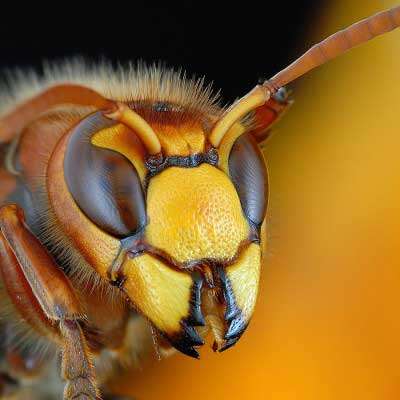
Flies navigate primarily through olfactory signals, detecting chemical compounds to locate food, breeding sites, and resting areas. Concentrated aromatic plant compounds create chemical interference that disrupts this navigation, making treated spaces feel hostile to flies.
What Essential Oils Keep Flies Away: The Research
A study in the Journal of the American Mosquito Control Association found plant-derived essential oils containing linalool, eugenol, and citronellal produced meaningful repellent effects against common fly species. Separate research confirmed peppermint, lavender, and basil-derived compounds produced strong aversion responses in houseflies.
Essential oil fly repellents work through olfactory disruption and need consistent presence to remain effective. A regular routine across diffusers, sprays, and surface applications maintains a sustained aromatic deterrent. Our guide on how to use essential oils covers dilution, application, and safety fundamentals.
Oils That Repel Flies: Building A Layered Approach
No single oil covers every fly species or environment. A layered approach using multiple botanicals across different delivery methods creates a more complete aromatic barrier, following the same principle behind traditional aromatic herb bundles used in kitchens for centuries. Our guide on essential oils for spring covers integrating fly repellent botanicals into a seasonal home routine when fly activity peaks.
Natural Fly Repellent Essential Oil: Lavender, Peppermint, And Basil
These three botanicals form the foundation of any plant-based fly deterrence practice. Each carries distinct aromatic compounds that flies find strongly aversive, and each works well individually and in combination.
Lavender And Peppermint: Versatile Fly Deterrents
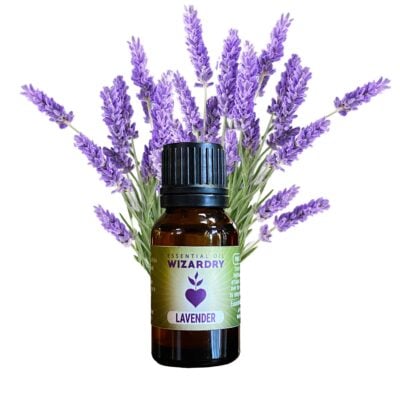
Lavender Essential Oil is one of the most broadly effective fly deterrents available. Its linalool content has been repeatedly documented in repellent research, and its compatibility with virtually every indoor and outdoor environment makes it practical for daily home use. Add a few drops to cotton balls and place them on windowsills, near doorways, or inside kitchen cabinets. Our Lavender Essential Oil is sourced from artisan origins including Swiss Alps Lavender Vera and an organic family farm in Bulgaria.
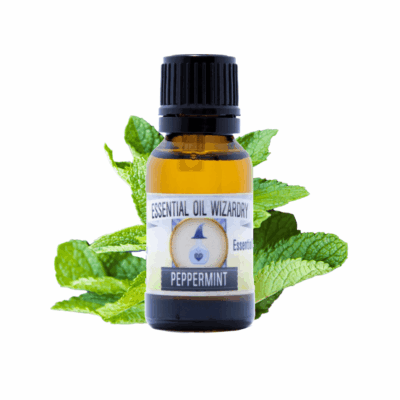
Peppermint Oil’s high menthol content creates an intense aromatic environment flies find deeply aversive. A diluted spray along countertops and near trash bins, combined with a diffuser session during meal prep, creates a strong deterrent field. Our Peppermint Oil is organically sourced from India and South Africa.
Sweet Basil: The Kitchen Ally
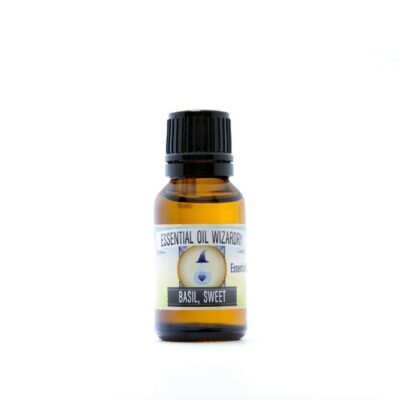
Sweet Basil Essential Oil carries a compelling reputation in traditional and contemporary fly deterrence. Basil plants have long been kept on kitchen windowsills across the Mediterranean and Southeast Asia because flies dislike their aroma, and the concentrated oil brings that deterrent activity in a more potent format.
Our Sweet Basil Essential Oil is steam distilled from organically cultivated plant material. A few drops in a small diffuser near a kitchen window creates an environment pleasant for humans and genuinely unwelcoming to houseflies. It blends naturally with lavender and lemon.
Essential Oil Fly Repellent: Eucalyptus, Lemon, And Atlas Cedar
Three additional botanicals round out a complete fly management practice with distinct deterrent profiles of their own.
Eucalyptus And Lemon: Bright And Penetrating
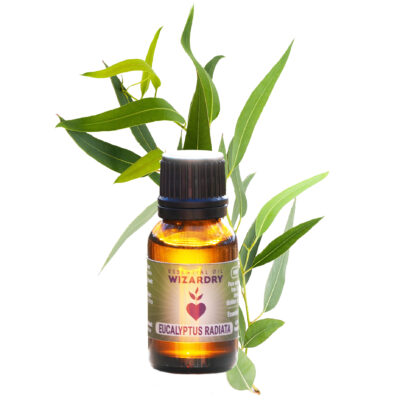
Eucalyptus Oil’s camphoraceous, high-cineole character is well-documented for deterrent activity across insects including flies. Its penetrating aromatic quality fills a space quickly when diffused and holds well on surfaces. Our Eucalyptus Oil is organically sourced and steam distilled.
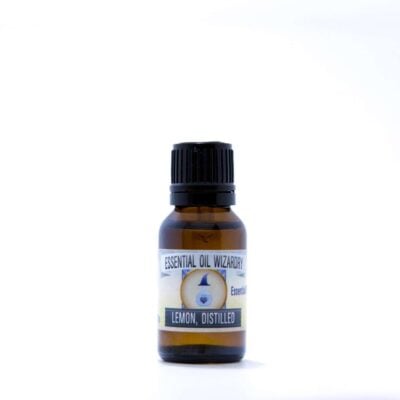
Lemon Oil brings a bright, citral-rich aromatic character with deterrent activity through its d-limonene content. Our Lemon Oil is hydrodistilled to reduce phototoxic risk; avoid applying to skin in direct sunlight. Our guide on citronella essential oil covers its repellent profile for those pairing it with lemon.
Atlas Cedar: Slow And Persistent
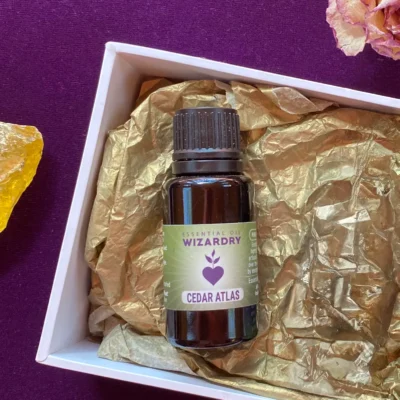
Atlas Cedar Oil brings a grounding, woody persistence to a fly deterrent routine that more volatile citrus and mint oils cannot match. Applied to fabric, wood surfaces, and outdoor furniture, it maintains deterrent activity between fresher applications. Our Atlas Cedar Oil is steam distilled from sustainably harvested Moroccan cedar.
Applying Your Fly Repellent Botanicals At Home
Combining multiple delivery methods targeting different areas produces lasting results. A routine matters more than a one-off application.
Delivery Methods That Work
Diffuse lavender, peppermint, or sweet basil in kitchen and dining areas during cooking for 20 to 30 minute sessions. Place peppermint or lavender cotton balls on windowsills and near entry points, refreshing every three to five days. Spray a diluted blend of lemon, eucalyptus, and peppermint along countertops, door frames, and outdoor table surfaces. Apply atlas cedar to wooden furniture and outdoor seating for a persistent background deterrent layer.
For broader pest management alongside fly deterrence, our guide on essential oils for ants covers how these botanicals apply across multiple household insects. For dilution guidance and carrier selection, our guide on carrier oils for essential oils is a practical reference.
Caring For Your Fly Repellent Botanicals
Keep all repellent oils sealed in a cool, dark cabinet away from heat and light. Like all of our products, these botanicals are best used within 2 to 5 years of opening.
Frequently Asked Questions About Essential Oils For Flies
What essential oils keep flies away most effectively?
Lavender, peppermint, sweet basil, eucalyptus, lemon, and atlas cedar are the most consistently documented botanical fly deterrents. Peppermint and basil have the strongest immediate effect on houseflies, while lavender and atlas cedar offer broader compatibility and persistence.
How do I make a natural fly repellent essential oil spray?
Combine 15 drops of peppermint, 10 drops of lemon, and 5 drops of eucalyptus in a 30ml spray bottle with water and a few drops of castile soap. Shake before each use and apply to countertops, door frames, and window edges. Reapply every one to two days.
Can I use these oils in my kitchen around food?
Diffusing and cotton ball applications are generally safer near food prep areas than surface sprays. Use food-safe surfaces only for spray applications. Lavender, basil, and lemon are the most kitchen-friendly options.
What is the best delivery method for essential oil fly repellent?
Combining diffusion, cotton ball placement, and surface sprays gives the most complete coverage. Diffuse during meal times, place cotton balls at entry points, and apply atlas cedar to furniture for lasting deterrence.
Are these oils safe around pets?
Peppermint and eucalyptus should be used with caution around cats and dogs. Apply in well-ventilated areas and avoid strong diffuser concentrations in confined spaces with animals. Lavender and atlas cedar are generally lower risk for surface applications.
How should I store my fly repellent essential oils?
Keep all bottles sealed in a cool, dark cabinet away from heat and light. Our fly repellent botanicals are best used within 2 to 5 years of opening.
DISCLAIMER:
The information provided is intended for educational and informational purposes only and reflects historical, cultural, and experiential perspectives. It is not intended to diagnose, treat, cure, or prevent any disease, nor should it be interpreted as medical, legal, or professional advice. Individual experiences may vary. Always use personal discernment and consult a qualified professional when appropriate.
Sources:
- Müller, G. C., Junnila, A., Butler, J., Kravchenko, V. D., Revay, E. E., Weiss, R. W., & Schlein, Y. (2009). Efficacy of the botanical repellents geraniol, linalool, and citronella against mosquitoes. Journal of Vector Ecology, 34(1), 2–8.
- Pavela, R. (2008). Insecticidal properties of several essential oils on the housefly (Musca domestica L.). Phytotherapy Research, 22(2), 274–278. https://doi.org/10.1002/ptr.2306