



Finding signs of mice in your home demands immediate action. For people who have built a home around natural products and conscious living, reaching for conventional poison rarely feels like the right fit. Plants have been used to deter rodents for as long as humans have stored food, and aromatic compounds in certain essential oils give that tradition a concentrated, practical modern form.

CHECK OUT OUR BLOG

Blue Lotus Extracts: A Guide To Concentrated Preparations
A guide to blue lotus concentrate in every form, from resin to tincture to absolute, with thoughtful guidance on use and dosing from Essential Oil Wizardry.

Blue Lotus Spiritual Meaning: Ancient Symbolism And Modern Use
A guide to blue lotus spiritual meaning, ancient symbolism, and modern ritual use, with plant-based wisdom and ceremonial insight from Essential Oil Wizardry.

Wild Lettuce Extract: Benefits, Uses, And What To Expect
Learn about wild lettuce extract, its traditional uses, wild lettuce dosing, and how it supports rest, with guidance from Essential Oil Wizardry.
Why Mice Respond To Aromatic Plant Compounds
Mice rely on an extraordinarily sensitive olfactory system to navigate their environment, locate food, and assess safety. Their sense of smell is far more powerful than ours, which means concentrated aromatic compounds in essential oils create a sensory intensity mice find strongly aversive.
The Research Behind Oils That Repel Mice
A study in Pest Management Science found peppermint oil significantly reduced rodent activity in treated areas, with mice consistently avoiding surfaces where it was present. Separate research documented that menthol-rich compounds and citrus-derived terpenes interfere with rodents’ ability to orient comfortably in treated environments.
Essential oil mouse repellents work through olfactory disruption rather than toxicity, appealing to households wanting to avoid chemical exposure. The trade-off is consistent reapplication as their volatile nature means the aromatic barrier fades. Our guide on how to use essential oils covers dilution, application, and safety basics.
Setting Realistic Expectations For Natural Rodent Repellents
Botanical repellents are most effective as a preventive measure and early deterrent. Applied consistently to entry points, wall gaps, under appliances, and storage areas, they create an aromatic environment mice prefer to avoid. For severe infestations, combine with professional pest management. Our guide on essential oils for ants covers how many of these botanicals extend across other pest concerns.
Peppermint Oil For Mice: The Most Researched Botanical Repellent
Peppermint is the most extensively documented essential oil for mouse deterrence. Its effectiveness is grounded in menthol content, and its high volatility fills a space quickly with a deterrent presence.
How To Use Peppermint Oil As A Mouse Repellent
Saturate cotton balls with undiluted or lightly diluted peppermint oil and place them behind appliances, inside cabinet corners, along baseboards, and near any gaps in walls or flooring. Replace every three to five days as potency fades.
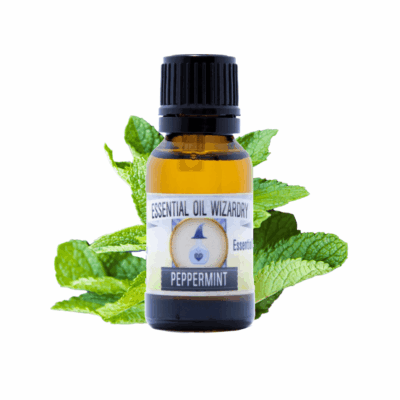
A diluted spray of 20 to 30 drops peppermint oil with water and a few drops of castile soap works well for larger surface areas. Shake before each use and reapply every few days. Our Peppermint Oil is organically sourced from India and South Africa, steam distilled to preserve its full menthol profile.
Spearmint As A Companion To Peppermint
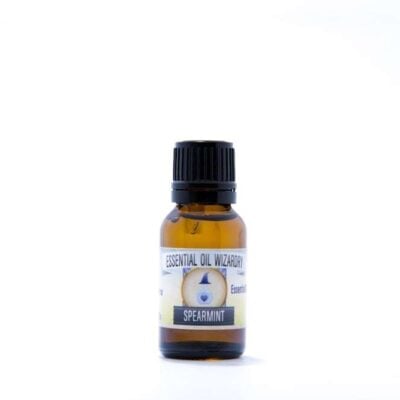
Spearmint Essential Oil carries a similar aromatic profile to peppermint but with a softer, slightly sweeter character. Used alongside peppermint in a cotton ball or spray blend, it adds another menthol-rich layer that broadens the deterrent profile. Our Spearmint Essential Oil is steam distilled from organically cultivated plant material.
Essential Oil Mouse Repellent: Eucalyptus, Tea Tree, And Lemon
Peppermint and spearmint anchor the toolkit, but eucalyptus, tea tree, and lemon each contribute distinct aromatic deterrent qualities that deepen the approach.
Eucalyptus And Tea Tree: Sharp And Persistent
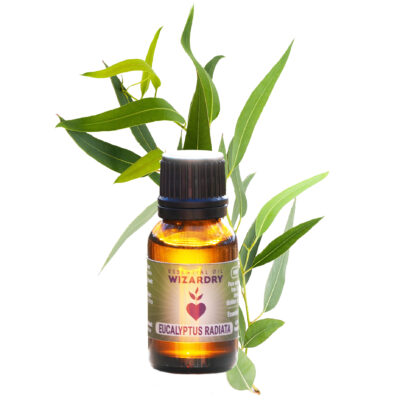
Eucalyptus Oil’s camphoraceous, penetrating aroma creates a sensory environment that rodents find disorienting. Its 1,8-cineole content lingers longer on surfaces than more volatile citrus oils, making it a valuable base layer in any mouse repellent blend. Our Eucalyptus Oil is organically sourced and steam distilled.
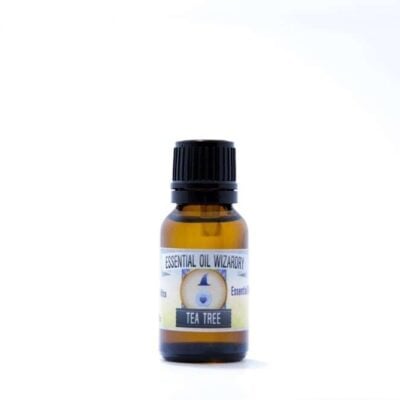
Tea Tree Oil adds clarifying, medicinal-edged aromatic character to a repellent blend. Its terpinen-4-ol content gives it a sharp intensity that complements eucalyptus and peppermint well. Our Tea Tree Oil is steam distilled from organically cultivated Australian leaves.
Lemon And Atlas Cedar: Brightness And Staying Power
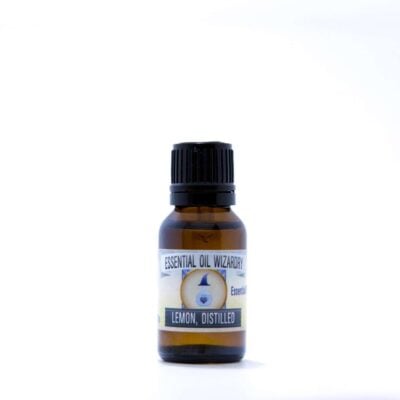
Lemon Oil brings a bright, citral-rich aromatic character with deterrent activity through its d-limonene content. Research on citrus-derived terpenes has documented repellent effects against rodents and insects. Our Lemon Oil is hydrodistilled to reduce phototoxic risk.
Atlas Cedar Oil offers the most persistent aromatic presence of this collection. Its slow-releasing, woody base lingers on surfaces and fabric far longer than the more volatile mint and citrus oils, providing a sustained deterrent layer. Our Atlas Cedar Oil is steam distilled from sustainably harvested Moroccan cedar.
Building A Whole-Home Natural Rodent Repellent Routine
Botanical mouse deterrence works best when systematic rather than reactive. Covering multiple entry points and high-activity zones consistently produces far better results than occasional heavy applications in a single area.
Practical Application Methods For Your Home
Place peppermint and spearmint cotton balls inside cabinet corners, behind appliances, and near visible gaps. Spray a diluted blend of eucalyptus, lemon, and peppermint along baseboards, door frames, and window edges weekly. Diffuse peppermint or eucalyptus in rooms where activity has been noticed for 20 to 30 minute sessions. Apply atlas cedar to wooden baseboards and fabric storage areas for a slow-releasing deterrent layer.
For spring or autumn when mouse activity tends to increase, our guide on essential oils for spring covers integrating repellent botanicals into a seasonal home practice. For dilution ratios and carrier selection, our guide on carrier oils for essential oils is a practical reference.
Caring For Your Repellent Botanicals
Keep all repellent oils sealed tightly in a cool, dark cabinet away from heat and direct light. Like all of our products, these botanicals are best used within 2 to 5 years of opening.
Frequently Asked Questions About Essential Oils For Mice
What essential oils repel mice most effectively?
Peppermint oil is the most extensively researched botanical mouse repellent, followed by spearmint, eucalyptus, tea tree, lemon, and atlas cedar. Layered across entry points and high-activity zones, they create a multi-compound aromatic barrier mice consistently prefer to avoid.
How does peppermint oil for mice actually work?
Mice have an extraordinarily sensitive olfactory system. Peppermint’s high menthol content creates an aromatic intensity mice find strongly aversive, disrupting their ability to navigate and orient comfortably in treated areas.
How often should I reapply essential oils to repel mice?
Cotton ball applications should be refreshed every three to five days. Surface sprays need reapplying every two to three days, or more in humid conditions. Atlas cedar tends to last longer between applications.
Are essential oils for mice safe around children and pets?
Peppermint and eucalyptus should be used with caution around young children and cats. Apply in well-ventilated areas, keep cotton balls out of reach, and avoid diffusing in confined spaces with animals. Atlas cedar and lemon are generally lower risk as surface applications.
Can I use these oils on all surfaces?
Most diluted sprays are safe on hard, sealed surfaces. Test on a small area before applying to unsealed wood, delicate fabrics, or painted surfaces. Cotton ball placement is safer for areas where surface contact could cause staining.
Do essential oils eliminate an existing mouse infestation?
Essential oils are most effective as a preventive deterrent. For an established infestation, combine them with thorough cleaning, sealing entry points, and professional pest management if needed.
DISCLAIMER:
The information provided is intended for educational and informational purposes only and reflects historical, cultural, and experiential perspectives. It is not intended to diagnose, treat, cure, or prevent any disease, nor should it be interpreted as medical, legal, or professional advice. Individual experiences may vary. Always use personal discernment and consult a qualified professional when appropriate.
Sources:
- Bhaskaran, K., Sivaramasamy, S., & Purushothaman, S. (2011). Repellent effect of plant essential oils against Mus musculus. Pest Management Science, 67(6), 714–719.
- Müller, G. C., Junnila, A., Butler, J., Kravchenko, V. D., Revay, E. E., Weiss, R. W., & Schlein, Y. (2009). Efficacy of the botanical repellents geraniol, linalool, and citronella against mosquitoes. Journal of Vector Ecology, 34(1), 2–8.