

Key Takeaways
- A Flower With Deep Roots: Ylang Ylang has a rich history in traditional cultures across Southeast Asia, valued for its aromatic richness and its role in ritual and personal care.
- Versatile In Practice: Ylang Ylang essential oil finds a natural home in perfumery, personal care, and intentional ritual, offering a range of sensory experiences depending on how it is used.
- Blending Invites Depth: Ylang Ylang pairs beautifully with a wide range of botanicals, making it a rewarding oil to explore for those building their own aromatic practice.
There are some plants that stop you in your tracks the moment you open the bottle. Ylang Ylang is definitely one of them. Its aroma is unmistakable: rich, floral, exotic, and slightly fruity, with a sweetness that feels both ancient and immediate. It is the kind of scent that lingers in memory, the way a garden does after rain. Whimsical, warm, familiar.
At Essential Oil Wizardry, we approach Ylang Ylang with the same care and reverence we bring to every botanical we carry. Sourced with integrity and vibrationally enhanced using energetic tools, ORMUS, and BioGeometry, our Ylang Ylang essential oil is crafted to honor both the plant’s long tradition and the intentions of the person working with it. We believe this flower has a lot to offer, and we want to help you get to know it well.
In this guide, we will cover Ylang Ylang essential oil benefits, how it is traditionally used, its applications for skin and hair, and practical tips for blending it into your own aromatic practice.
The Story Behind Ylang Ylang
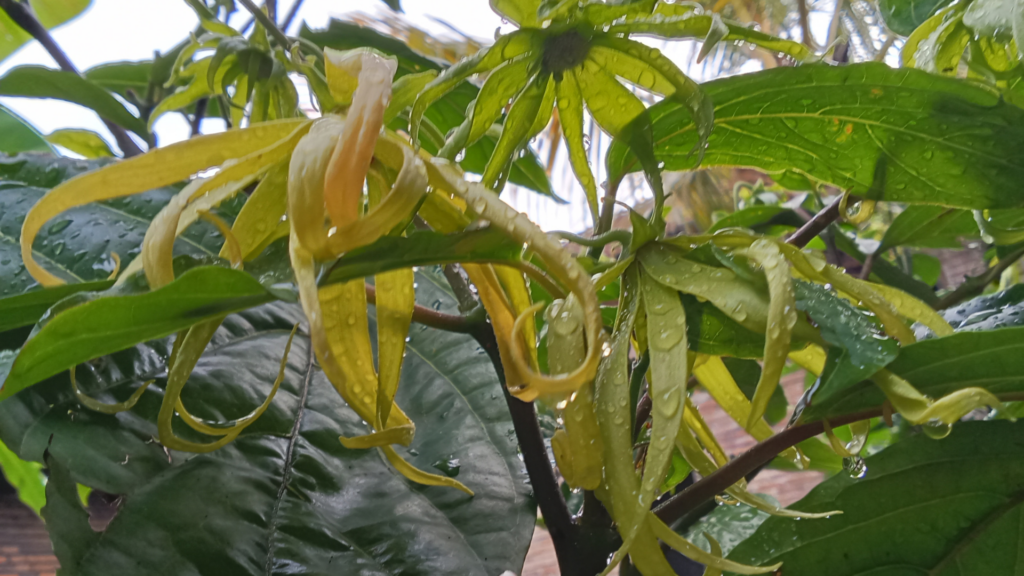
Ylang Ylang, known botanically as Cananga odorata, is a tropical flowering tree native to the Philippines, Indonesia, and parts of Southeast Asia. Its name is said to mean “flower of flowers” in Filipino, a title that speaks to the esteem in which it has long been held. The flowers bloom in clusters of pale yellow, releasing their most potent fragrance at night, when they are traditionally harvested by hand.
For centuries, Ylang Ylang has been woven into the daily and ceremonial life of the cultures where it grows. In Indonesia, it has been used in wedding ceremonies and applied to the hair and skin as part of beauty rituals. In the Philippines, it has been placed in the home as a symbol of welcome and sensory pleasure. This living tradition reflects the plant’s enduring presence across generations. Some people say Ylang Ylang is the flower so nice, they named it twice!
Ylang Ylang Essential Oil And How It Is Made
The essential oil is produced through steam distillation of the fresh flowers, a process that draws out the volatile aromatic compounds while preserving the flower’s characteristic depth and sweetness. Distillers often produce several grades of Ylang Ylang oil by separating what comes through at different stages of distillation. The first fraction, known as “extra,” carries the brightest, most exotic and intensely beautiful aromatic expression. Later fractions carry a softer, less expressive, more rounded character. Understanding this layering is part of appreciating the oil’s full aromatic range. You can read more about how distillation shapes a plant’s aromatic profile in our guide to essential oil extraction methods.
Typically “Extra” grade Ylang Ylang is the first 1-2 hours of the distillation, and subsequent grades will be the fractional distilled collections between 2-24 hours. Ylang Ylang “Complete” carries the complete distillation of the Ylang Ylang flower and yields the most balanced, complete and therapeutic expression. Higher grades of Ylang Ylang (especially II – IV) may be considered to be lower quality fractions of Ylang Ylang in the eyes of botanical connoisseurs.
Essential Oil Wizardry only carries the Ylang Ylang Extra, and Ylang Ylang Complete grades for these reasons.
Ylang Ylang Essential Oil Benefits And Traditional Uses
Ylang Ylang has been used across cultures for its aromatic and sensory qualities, and its traditional applications offer a meaningful starting point for anyone curious about working with this flower. Rather than making specific outcome-based claims, we find it more useful to share how this oil has traditionally been approached and what people tend to notice when they bring it into their practice.
Mood, Atmosphere, And Emotional Presence
Perhaps the most widely noted quality of Ylang Ylang is its effect on atmosphere and emotional tone. Traditionally used in ceremonial and intimate settings, the oil is often associated with a sense of warmth, relaxation, and openness. Many people find that diffusing Ylang Ylang softens the quality of a space, making it feel more inviting and grounded.
It is often reached for during moments of personal ritual, creative exploration, or evening wind-down. Some people describe a shift in mood when working with the oil aromatically, a quieting of mental noise and a settling into the present moment. These are subtle, experiential qualities rather than guaranteed effects, and they tend to be most noticeable when the oil is approached with intention and patience.
For those drawn to the emotional and ceremonial dimension of plant work, Ylang Ylang blends naturally with other heart-centered botanicals. Our Heart Harmony blend draws on this tradition, weaving together florals and resins in a way that honors Ylang Ylang’s capacity to open and soften.
Ylang Ylang Uses In Perfumery And Scent Blending
Ylang Ylang holds a distinguished place in the world of natural perfumery. It is a classic heart note, meaning it forms the emotional core of a fragrance rather than its opening or closing impression. Its sweetness and floral depth make it a bridge between bright top notes and grounding base notes, giving a blend cohesion and warmth.
In botanical perfumery, it is often paired with citrus oils like bergamot or neroli to lift its heaviness and floral intensity, and with woods or resins like sandalwood or frankincense to add earthiness and staying power. A little goes a long way, and blending less is more with Ylang Ylang! Ylang Ylang is a potent oil aromatically, and restraint in blending tends to yield more sophisticated, wearable results than a heavy hand which can overpower other ingredients. Those interested in working with Ylang Ylang in a perfumery context may find our Botanical Perfumery Collection a helpful place to begin.
Try blending at 1-2.5% to start off with, if you are first experimenting with Ylang Ylang! Often times you can create a creamy, exotic floral aroma-complex using the correct amount of Ylang Ylang. Believe it or not, with even just a single drop margin of error, it is possible to ruin the overall perfume scent with floral intensity, by collapsing the other aromatic notes using a bit too much Ylang Ylang. Start low and add slow, to discover the perfect blend with Ylang Ylang.
Ylang Ylang For Skin And Hair Care
Beyond its aromatic applications, Ylang Ylang has a long history of use in personal care. Traditional beauty practices across Southeast Asia have incorporated the flower and its oil into preparations for both skin and hair, reflecting generations of lived knowledge about the plant’s qualities.
Ylang Ylang For Skin
Ylang Ylang is generally considered suitable for most skin types when properly diluted in a carrier oil. It has traditionally been included in formulations intended to support the appearance of balanced, well-nourished skin. Its aromatic richness also makes it a pleasant addition to massage blends, body oils, and self-care rituals where both sensory experience and skin contact are part of the intention.
As with all essential oils, dilution is very important before applying Ylang Ylang directly onto the skin. A general starting point for most adults is a 1 to 2% dilution in a carrier oil such as jojoba, sweet almond, or fractionated coconut oil. Those with sensitive skin may want to begin at an even lower dilution and observe how their skin responds before proceeding further. Our guide on how to use essential oils covers dilution ratios and application methods in more detail.
Ylang Ylang For Hair
Ylang Ylang has traditionally been used in hair care preparations across Southeast Asia, where it was often infused into coconut oil and applied to the scalp and lengths of the hair. It is still commonly included in hair oils and serums today, appreciated for its aromatic richness and its long association with lustrous, well-tended hair in traditional beauty practices.
To incorporate Ylang Ylang into a hair care routine, try adding 2 to 3 drops to a tablespoon of a nourishing carrier oil such as coconut, argan, or castor oil. Apply to the scalp and hair, leave for 20 to 30 minutes, and rinse thoroughly. The experience is as much about the ritual as the result, a quiet, fragrant moment of care that connects you to a tradition spanning generations.
If you would like to add a more soft, green expression of Ylang Ylang, try the specific varietal from Indonesia called “Cananga”. This is great for cosmetic purposes, including hair, and carries a balanced green note with a mild peppery tone, which balances perfectly with the creamy, exotic floral note which is so characteristic of Ylang Ylang.
How To Bring Ylang Ylang Into Your Daily Rituals
Ylang Ylang does not need to be reserved for special occasions. Its aromatic depth makes it a meaningful companion for everyday moments of intention, such as during a quiet morning, or an evening self-care ritual before bed. Working with it consistently, even in small ways, often deepens your relationship with the plant and makes its subtler qualities more noticeable over time.
Some people like to add a drop or two to a personal inhaler for moments of calm throughout the day. Others incorporate it into a bedtime body oil, or diffuse it alongside grounding woods or soft resins during meditation or journaling. There is no single right way. What matters most is approaching the oil with presence and allowing the experience to unfold at its own pace.
A Practical Guide To Blending With Ylang Ylang
Ylang Ylang rewards those who approach it with curiosity and a light touch. Its intensity can easily dominate a blend if overused, but when balanced thoughtfully, it adds a warmth and floral depth that is genuinely hard to replicate with any other oil.
Blending Ratios And Complementary Oils
As a general starting point, Ylang Ylang may work well at around 5 to 10% of a total blend. However we suggest starting at 1 – 2.5%, and adjusting the ratio up to 2.5 – 5%, before continuing to experiment with increasing it’s potency. Pairing it with oils that either brighten or ground its sweetness tends to yield the most harmonious results. Some well-loved combinations include:
- Ylang Ylang with bergamot and cedarwood for a warm, uplifting blend with staying power
- Ylang Ylang with rose and sandalwood for a deeply floral, grounding perfume oil
- Ylang Ylang with patchouli and vetiver for an earthy, sensual base
- Ylang Ylang with neroli and frankincense for a ceremonial, heart-centered blend
Start with a small test blend before committing to a larger batch. Allow the blend to sit for 24 to 72 hours before evaluating the final aroma, as the notes will shift and integrate over time.
As with all botanicals we carry, the Ylang Ylang we source is organic or wildcrafted, unsprayed, and free from pesticide residues. It is best used within 2 to 5 years of purchase and stored away from heat, light, and air to preserve its aromatic integrity.
Final Thoughts
Ylang Ylang is a plant that rewards presence. Its aroma unfolds slowly, revealing new layers the more time you spend with it. The experience is like stepping into a place you somehow remember, even if you’ve never been before. Whether you are drawn to its role in traditional beauty rituals, its place in natural perfumery, or its capacity to soften and warm a space, this is a flower worth getting to know on a deeper level.
At Essential Oil Wizardry, we are glad to carry an oil that holds so much history and aromatic richness. We hope this guide gives you a meaningful starting point for your own exploration of Ylang Ylang essential oil benefits and the many ways this remarkable flower can find a place in your practice.
Frequently Asked Questions About Ylang Ylang Essential Oil Benefits
What does ylang ylang essential oil smell like?
Ylang ylang has a rich, intensely floral aroma with sweet, slightly fruity, and subtly spicy undertones. It is often described as intoxicating, creamy and exotic, with a warmth that deepens over time. Its scent is considered one of the more complex and distinctive in the world of botanical oils.
How is Ylang Ylang essential oil traditionally used?
Traditionally, Ylang Ylang has been used in ceremonial settings, personal beauty rituals, and as a fragrant addition to the home. It has a long history in Southeast Asian cultures where it was applied to the hair and skin, used in wedding ceremonies, and appreciated for its mood-softening aromatic qualities.
Can ylang ylang be applied directly to the skin?
Ylang ylang should always be diluted in a carrier oil before skin application. A 1 to 2% dilution is a safe starting point for most adults. Those with sensitive skin should start at a lower concentration and observe how their skin responds before increasing the amount.
Is Ylang Ylang safe for all skin types?
Ylang Ylang is generally considered suitable for most skin types when properly diluted. However, as with any essential oil, individual responses can vary. Performing a patch test before broader application is always a thoughtful step, especially for those with reactive or sensitive skin. You can always build up your usage once you’ve seen how your skin reacts, and then move forward accordingly.
What carrier oils pair well with Ylang Ylang for skin use?
Jojoba, sweet almond, and fractionated coconut oil are all popular choices for diluting Ylang Ylang for skin application. These carriers are light, well-absorbed, and allow Ylang Ylang’s aromatic qualities to come through without feeling heavy on the skin.
How much Ylang Ylang should I use in a blend?
Ylang Ylang is aromatically potent, so a little goes a long way. Starting at around 1 to 2.5% of a total blend is a good general guideline, and some blends may call for the 2.5 – 10% range. In perfumery, even smaller amounts can have a significant impact on the overall scent profile. And starting slow with Ylang Ylang is a great method to produce an aroma you love.
Which oils blend well with Ylang Ylang?
Ylang Ylang pairs beautifully with bergamot, neroli, rose, sandalwood, frankincense, cedarwood, patchouli, and vetiver. It bridges floral and earthy notes well, making it a versatile heart note with staying power in both personal care and perfumery blends.
How should Ylang Ylang essential oil be stored?
Like all essential oils, Ylang Ylang should be stored in a dark glass bottle away from heat, light, and air. Proper storage preserves its aromatic integrity and extends its useful life. Our Ylang Ylang is best used within 2 to 5 years of purchase.
What is the difference between Ylang Ylang grades?
Ylang Ylang oil is often produced in multiple grades based on when it is collected during distillation. The “extra” grade carries the brightest, most intense floral notes, while later grades have a deeper, more rounded aromatic character. Each grade has its own qualities and applications depending on the intended use. Essential Oil Wizardry sources only “extra” and “complete” for their aromatic and therapeutic excellence, as these are considered the superior distillations of Ylang Ylang.
Can Ylang Ylang be used in a diffuser?
Yes, Ylang Yang diffuses well and is a popular choice for creating a warm, floral atmosphere in a space. Because of its intensity, blending it with lighter oils in the diffuser, such as bergamot or citrus, can soften its presence and make it more suitable for extended use.
DISCLAIMER:
The information provided is intended for educational and informational purposes only and reflects historical, cultural, and experiential perspectives. It is not intended to diagnose, treat, cure, or prevent any disease, nor should it be interpreted as medical, legal, or professional advice. Individual experiences may vary. Always use personal discernment and consult a qualified professional when appropriate.