



Key Takeaways:
- Same Plant, Different Expression: Kanna tincture and kanna resin both capture the character of Sceletium tortuosum, but they do so at different concentrations and via absorption pathways suited to different intentions and experience levels.
- Tincture Offers Precision, Resin Offers Depth: A tincture is the more accessible and consistent format. Resin is more concentrated and rewards practitioners who are already familiar with the plant.
- Kanna Effects Are Shaped By Format And Context: How kanna expresses itself depends not just on which preparation you use, but on how much you take, when you take it, and what setting you bring to the experience.
Kanna, known botanically as Sceletium tortuosum, is a South African succulent with one of the longest records of intentional human use among mood-supportive plants. Indigenous communities across the Cape region of South Africa chewed, smoked, insufflated, and brewed it for centuries, valuing its uplifting, mood-brightening, and socially opening character. Today, it is available in several modern formats, and for many people, the first meaningful question is not whether to work with kanna, but which preparation to start with.
At Essential Oil Wizardry, we carry kanna in both tincture and resin form because we believe different formats serve different practitioners and different intentions. More than 95% of what we carry is organic or wildcrafted, unsprayed, and vibrationally enhanced using energetic tools, ORMUS, and BioGeometry.
In this article, we will compare kanna tincture and kanna resin across their practical differences, kanna effects by format, and how to decide which one fits where you are in your practice right now.
Understanding The Sceletium Tortuosum Guide: What Kanna Actually Is
This Sceletium tortuosum guide starts with the basics: before comparing formats, it helps to understand what kanna is and why it’s worth working with in the first place. Sceletium tortuosum is a small, fleshy succulent that grows in arid regions of South Africa. Its primary active compounds, mesembrine and related alkaloids, are responsible for its characteristic mood-elevating and socially warming effects, a profile researchers have linked to serotonergic pathways and reduced reactivity in the brain’s threat-response circuitry (Acute effects of Sceletium tortuosum, 2013).
Unlike many botanical preparations whose effects are subtle and atmospheric, kanna tends to be fairly direct in its character. Most people notice something within 20 to 30 minutes of use, making it a plant that offers relatively clear feedback as they find the right amount and format. This directness is part of what makes it useful for building a genuine personal understanding of how the plant affects you. Our broader article on kanna effects and benefits covers the experiential and traditional dimensions of the plant in more depth.
Why Format Matters More With Kanna Than With Some Other Plants
Because kanna’s active compounds are relatively potent and direct-acting, the route you take it has a meaningful impact on the speed, intensity, and duration of its effects. A tincture and a resin preparation of the same plant can produce noticeably different experiences, even at comparable constituent levels, simply because of how the body encounters and processes each. Understanding this is one of the most practically useful things a new kanna practitioner can hold going in.

Kanna Resin Vs Tincture: A Direct Comparison
With a clear picture of what kanna is and why format matters, the comparison between kanna resin and tincture becomes more meaningful and practical.
Kanna Tincture: Accessible, Precise, And Beginner-Friendly
A kanna tincture delivers the plant’s active alkaloids in a liquid, alcohol-based form that absorbs relatively quickly and allows for precise, easy dosing. Five to fifteen drops under the tongue or in warm water is a sensible starting range for most beginners. The liquid format also allows for gradual adjustment in ways that solid resin preparations do not, making it the more forgiving choice for those still learning how kanna affects them.
Our Ultrasonic Kanna Tincture uses advanced sound-wave extraction technology that draws a broader range of the plant’s constituents into solution than traditional alcohol soaking alone, without additional heat. This extraction process is known to enhance the bioavailability of the tincture, which is responsible for the potency our community experiences with our Ultrasonic Tinctures. For those wanting context on how tinctures compare to other liquid preparations more broadly, our guide on essential oil tinctures vs. oils offers a useful frame.
Kanna Resin: Concentrated, Potent, And For Experienced Practitioners
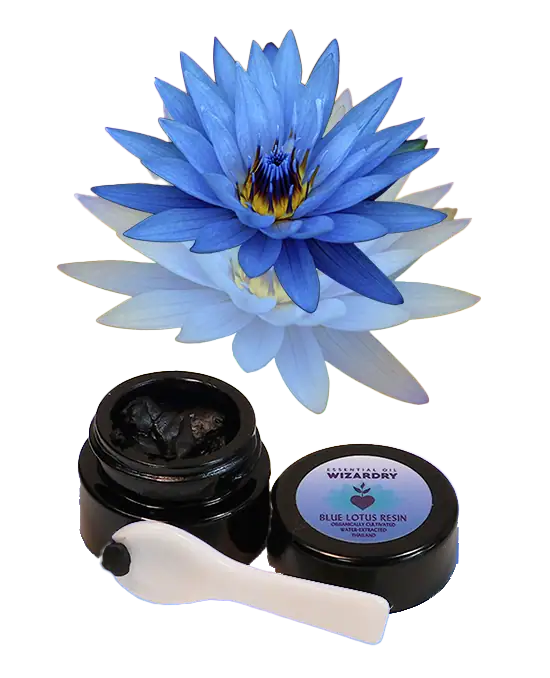
Kanna resin is a more concentrated preparation, produced by reducing and condensing the plant’s constituents into a dense, semi-solid form. A rice-grain-to-pea-sized amount is a typical starting point, taken directly or dissolved in warm water. Its effects tend to be stronger and longer-lasting than a comparable amount of tincture, and it is best reserved for those who have already developed a clear personal sense of how kanna affects them through gentler preparations. Resin is intended primarily for ingestion rather than aromatic use; its scent is typically mild, and the taste can range from pleasant or neutral to more medicinal depending on the batch. Some people report the kanna resin tastes / smells similar to dark chocolate with some bitterness and salt.
The Kanna Resin we carry reflects our commitment to sourcing integrity and quality throughout. For those curious about the broader world of concentrated botanical preparations, our 100x Extract Guide and our dedicated Kanna Extract 100x page cover these options in more detail.

Choosing The Best Kanna Format For Your Practice
Choosing the best kanna format ultimately comes down to two questions: how familiar are you with kanna already, and what kind of experience are you seeking?
Here are a few practical guidelines to help clarify the choice:
- If you’re new to kanna, start with the tincture. Its precise dosing, relatively gentle onset, and forgiving character make it the most appropriate entry point for building genuine familiarity with the plant.
- If you have worked with kanna tincture regularly and feel ready for a deeper engagement, resin is a natural next step.
- If you are primarily seeking a social, mood-brightening experience in a group or shared context, tincture is easier to work with reliably in those settings. If you want a stronger, more intense, and intentional experience with the group, the resin may be a better option – we recommend the group having some experience with kanna beforehand!
- If you are looking for a more solitary, contemplative, or ceremonial experience with greater depth and staying power, resin may serve that intention better.
- All preparations are best stored away from heat, light, moisture and air and used within 2 to 5 years of purchase. Note that the resin may dry out over time, but it tends to remain potent and active despite hardening.
The right format is the one that matches both your current level of familiarity with the plant and the quality of experience you are genuinely seeking.

Final Thoughts
Kanna tincture and kanna resin are two expressions of the same remarkable plant, each suited to different moments, different intentions, and different levels of experience. Neither is universally better. Both deserve to be approached with the kind of attentiveness and respect that Sceletium tortuosum has earned through centuries of meaningful human relationship. At Essential Oil Wizardry, we carry both because we believe practitioners deserve the full range of what this plant has to offer.
Frequently Asked Questions About Kanna Tincture
What is kanna tincture used for?
Kanna tincture is most commonly used for mood support, social ease, and a gentle uplifting quality of awareness. It is the most accessible and beginner-friendly format for those new to working with Sceletium tortuosum.
How does kanna tincture differ from kanna resin?
Kanna tincture is a liquid preparation that absorbs relatively quickly and allows for precise dosing. Kanna resin is more concentrated, slower to develop in some respects, and produces effects that tend to be stronger and longer-lasting. Tincture suits beginners; resin suits those with established familiarity, wanting a more powerful experience.
What are typical kanna effects?
Kanna effects are most commonly described as mood elevation, social warmth, and a gently uplifting quality of awareness. Effects typically begin within 20 to 40 minutes and vary depending on format, amount, and individual sensitivity. People report the effects lasting between 1-3 hours depending on dose, timing, and setting, with a majority of the potency occurring within 1-2 hours.
How much kanna tincture should I take?
Five to fifteen drops in warm water or under the tongue is a sensible starting range for most beginners. Allow at least 30 to 40 minutes before assessing and adjusting. Dr. Nick has reported using 1-3 dropperfuls held under the tongue for 30 seconds for more powerful, social experiences as a substitute for alcohol.
Is kanna resin appropriate for beginners?
Kanna resin is better suited to those who have already developed a personal understanding of how kanna affects them through tincture or other gentler preparations. It is not the ideal starting point for someone new to the plant.
How should kanna preparations be stored?
Store in a cool, dark location away from heat, light, and air. Most preparations maintain their quality well under proper storage conditions and are best used within 2 to 5 years of purchase.
DISCLAIMER:
The information provided is intended for educational and informational purposes only and reflects historical, cultural, and experiential perspectives. It is not intended to diagnose, treat, cure, or prevent any disease, nor should it be interpreted as medical, legal, or professional advice. Individual experiences may vary. Always use personal discernment and consult a qualified professional when appropriate.
Sources:
- Terburg, D., Syal, S., Rosenberger, L. A., Heany, S., Phillips, N., Gericke, N., Stein, D. J., & van Honk, J. (2013). Acute effects of Sceletium tortuosum (Zembrin), a dual 5-HT reuptake and PDE4 inhibitor, in the human amygdala and its connection to the hypothalamus. Neuropsychopharmacology, 38(13), 2708–2716. https://doi.org/10.1038/npp.2013.183