


Key Takeaways:
- Damiana Has A Long History As A Warming, Vitalizing Plant: Damiana leaf benefits have been recognized across Mexican, Mesoamerican and Caribbean traditions for centuries, valued for its uplifting, warming, and sensory-opening character.
- Its Aphrodisiac Uses Are Subtle: Damiana aphrodisiac effects are most accurately understood as mood and atmosphere-supporting rather than direct. Context and intention shape the experience considerably.
- Honest Expectations Make For A Better Practice: Understanding what damiana can and cannot do helps you approach it with realistic, attentive engagement that allows its gentler gifts to arrive.
There is something appealing about a plant with a reputation. Damiana, known botanically as Turnera diffusa, has carried the label of aphrodisiac for centuries, and that reputation has followed it from its origins in Mexico, Central America, and the Caribbean into modern wellness conversations. But reputations, when left unexamined, can set expectations that a plant cannot fully meet. The truth about damiana is more interesting and more useful than its reputation alone suggests.
At Essential Oil Wizardry, we carry damiana because we believe in plants that offer something genuinely valuable when approached with honesty and mindfulness. Founded by a holistic-minded, retired pharmacist, our work is guided by a refusal to overstate what any botanical can do, and a passion for sourcing authentic expressions of the bountiful gifts Mother Nature offers us. More than 95% of what we carry is organic or wildcrafted, unsprayed, and vibrationally enhanced using energetic tools, ORMUS, and BioGeometry.
In this article, we will share the top damiana benefits, what side effects to be aware of, and how to use it in a way that honors both the plant and your intentions.
Damiana Leaf Benefits And Its Traditional Character
Damiana has been used in traditional botanical practice across Mexico, Central America, and the Caribbean for hundreds of years. Its dried leaves were brewed as a tea, smoked ceremonially, and incorporated into preparations associated with vitality, mood, and sensory openness. To be specific, in Mexico, the plant is revered and often used to craft traditional brews and fine liqueurs, noted for its warming, sensual qualities. Meanwhile, indigenous communities valued it not just for any single effect but for the quality of aliveness it seemed to support in those who worked with it regularly.
The plant’s aromatic profile is worth noting because it is part of what makes the experience distinctive. Damiana has a warm, slightly bitter, herbal scent with subtle sweet undertones that feel both grounding and gently stimulating. Historically, this aromatic character made it a valued ingredient in layered botanical preparations designed for connection, creativity, and shared presence.

Damiana Aphrodisiac Effects: What The Evidence Suggests
Damiana aphrodisiac effects are supported by both traditional use and some preliminary research, but they are not as straightforward as popular reputation might suggest. Studies have looked into damiana’s potential to support libido-related responses, though human research remains limited and early-stage (Parra-Naranjo et al., 2023). What traditional use tends to describe is a warming, mood-elevating, and sensory-opening quality that creates favorable conditions for intimacy and connection rather than producing a direct pharmacological response. Stronger experiences with damiana, such as the 100x extract of damiana resin, may elicit enhanced body sensations which can increase pleasure during intimacy.
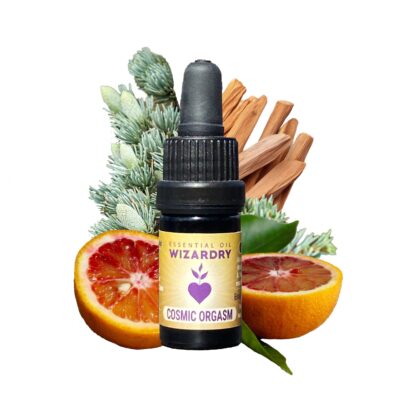
That being said, damiana is better understood as a botanical that supports the atmosphere and inner quality from which intimacy can arise, rather than a stimulant that produces desire on demand. Context and intention shape the experience as much as the plant itself, and those who approach it with patience and a supportive setting tend to find it rewarding. For those seeking aromatic support alongside damiana, our Cosmic Orgasm Aphrodisiac Essential Oil Blend weaves together botanicals with complementary warming and sensory-opening traditions.
Damiana Side Effects And Limitations: What To Be Aware Of
Part of approaching any plant thoughtfully is acknowledging what it cannot do and what to watch for when working with it. At moderate amounts, damiana is generally well-tolerated by most people. Those with blood sugar sensitivities are sometimes advised to approach damiana with additional care, as some preliminary evidence suggests it may influence blood sugar dynamics. Consulting a qualified practitioner before working with any new botanical is a smart step, particularly for those with existing medical considerations.
Damiana is also not recommended during pregnancy. Beyond these considerations, the main practical limitation of damiana is simply that its effects help to radiate more inner joy in a very smooth and gentle fashion. Those expecting dramatic or immediate results are likely to be disappointed. Those who approach it with patience and the right context typically find it to be a pleasant plant that reveals its character gradually rather than all at once. The ultrasonic tincture is very gentle and smoothly integrated, while the 100x resin extract delivers the most pronounced and potent experience.

How To Use Damiana In Your Practice
Figuring out how to use damiana properly is what separates a rewarding experience from an underwhelming one. Here are the most practical ways to incorporate damiana into a botanical practice:
- Damiana Leaf Tea: Brew one to two grams of dried damiana leaf and drink it 30 to 60 minutes before an intended intimate or sensory ritual. The act of preparation itself can be part of the experience, letting you enjoy a moment that is slow, deliberate, and unhurried.
- Ultrasonic Tincture Or Liquid Extract: Working with a tincture allows for more precise dosing and consistent character across sessions. If you are uncertain whether a tincture or essential oil format is more aligned with your practice, our guide on essential oil tinctures vs. oils offers a clear and practical comparison of both pathways.
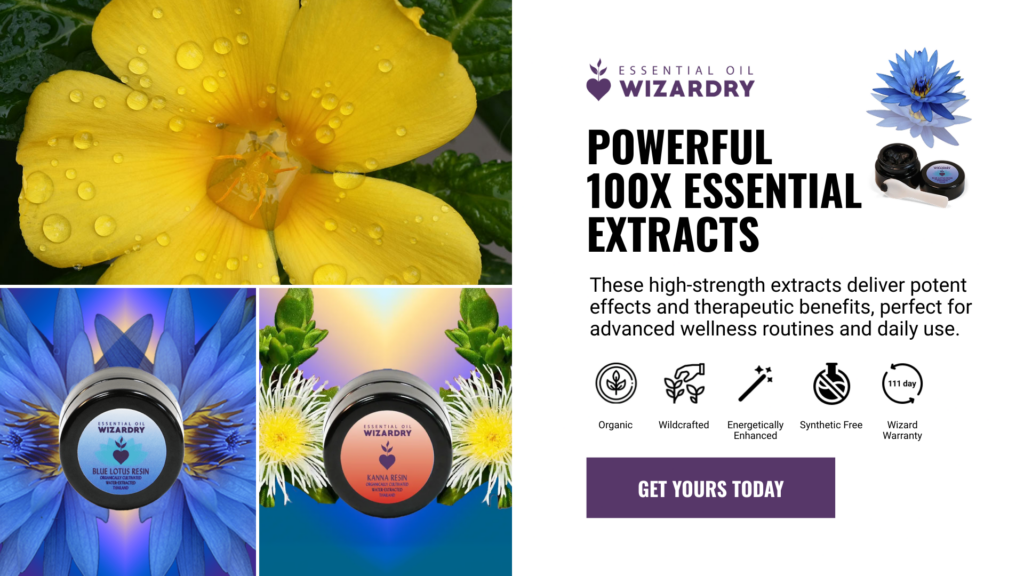
- Damiana Resin 100x Extract: For the most powerful expression of the plant, our Damiana Resin 100x Extract delivers a concentrated form suited to those already familiar with damiana’s character through gentler preparations. The resin is thick, water-soluble, and warm-herbaceous in aroma. Used alone or dissolved into warm water, it offers a deeply concentrated engagement with the plant’s most essential qualities.
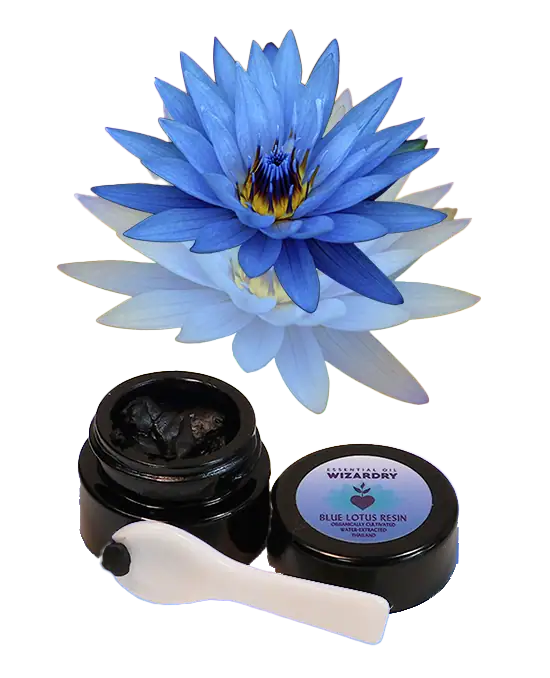
- Pairing With Complementary Botanicals: Damiana layers naturally with blue lotus or cacao for a more textured sensory and ceremonial experience. For those curious about the broader world of concentrated botanical preparations, our 100x Extract Guide covers this territory in useful depth.
Ultimately, setting, mood, and shared intention amplify damiana’s atmosphere-dependent character more than any increase in amount. Starting with a small amount in a supportive context consistently yields more than a larger amount taken without attention or care. Above all else, building awareness over time is the most reliable approach, regardless of which format you choose.
Final Thoughts
Generally speaking, damiana’s benefits create conditions rather than produce outcomes. Its warming, mood-brightening, and sensory-opening character has been valued for centuries precisely because it supports the kind of presence and openness from which intimacy and vitality naturally arise. At Essential Oil Wizardry, we carry damiana because we believe in plants that tell the truth about what they offer. Damiana is a pleasant, gentle, mood-elevating, body-enhancing ally.
Frequently Asked Questions About Damiana Benefits
What are the damiana leaf benefits?
Damiana leaf benefits center on its warming, mood-elevating, and sensory-opening character. It has a long traditional association with vitality, intimacy, and a quality of inner aliveness that supports connection and presence. Body sensations may be enhanced during the usage of damiana, especially with the 100x resin extract.
What is the difference between damiana leaf and damiana resin?
Damiana leaf is the standard dried plant material used for tea, tinctures, and smoke preparations. The 100x resin extract is a far more concentrated form, where one gram of resin represents the essence of approximately 100 grams of plant material. They are meaningfully different in potency and are best approached accordingly.
Does damiana actually work as an aphrodisiac?
Damiana’s aphrodisiac effects are subtle, though body sensations may enhance during an experience with the plant to enhance pleasure. The plant supports the conditions from which intimacy can arise, through mood elevation and sensory warmth, rather than producing a direct pharmacological response. Context and intention shape the experience considerably.
What are the side effects of damiana?
At moderate amounts, damiana is generally well-tolerated. That said, very high doses are not recommended. Those with blood sugar sensitivities and those who are pregnant are advised to consult a qualified practitioner before use.
How do you use damiana?
Damiana is most commonly used as a tea, tincture, or concentrated resin extract. One to two grams of dried leaf brewed as tea, taken 30 to 60 minutes before an intended ritual or intimate context, is a good starting approach. Our ultrasonic tincture is a fantastic, gentle mood enhancer that is very smooth and integratable into your day. More concentrated preparations, like the resin, are best suited to those who have already become familiar with the plant.
How long does it take for damiana to work?
Damiana’s effects build gradually over 30 to 60 minutes. Its character is subtle and context-dependent, tending to reveal itself most clearly in calm, intentional settings rather than busy or distracted ones.
Can damiana be combined with other botanicals?
Generally, yes. Damiana pairs well with other warming, mood-elevating botanicals and aromatic preparations. Combining it with complementary plants, such as cacao, in a sensory ritual can deepen its character and create a more layered experience.
DISCLAIMER:
The information provided is intended for educational and informational purposes only and reflects historical, cultural, and experiential perspectives. It is not intended to diagnose, treat, cure, or prevent any disease, nor should it be interpreted as medical, legal, or professional advice. Individual experiences may vary. Always use personal discernment and consult a qualified professional when appropriate.
Sources:
- Parra-Naranjo, A., Delgado-Montemayor, C., Salazar-Aranda, R., & Waksman-Minsky, N. (2023). Bioactivity of the Genus Turnera: A Review of the Last 10 Years. Pharmaceuticals (Basel, Switzerland), 16(11), 1573. https://doi.org/10.3390/ph16111573