



Key Takeaways
- Blue Lotus Is Generally Considered Gentle: With a long history of traditional use, blue lotus is widely regarded as a subtle, low-risk botanical when approached with care and personal discernment.
- Dosing And Context Shape The Experience: Most reports of unwanted effects trace back to using too much, adulterated or mislabeled formulations, combining preparations, or approaching the plant without adequate context.
- Personal Discernment Is Always The Guide: Every person responds differently to plant preparations, and starting slowly remains the most thoughtful and reliable approach.
Curiosity about a plant naturally leads to questions about safety. Blue lotus has been used ceremonially and personally for thousands of years, and its gentle reputation is part of what draws so many people to it. At the same time, any plant deserves to be approached with honesty, including an honest conversation about what to be aware of before you begin.
At Essential Oil Wizardry, we believe transparency is part of respecting both the plant and the person working with it. Founded by a holistic-minded, retired pharmacist, our approach always honors traditional wisdom alongside genuine care for our community. More than 95% of what we carry is organic or wildcrafted, unsprayed, and free from pesticide residues.
In this article, we will cover what is currently understood about blue lotus side effects, how blue lotus dosing relates to the likelihood of unwanted experiences, and how to approach this plant with the care it deserves.
What The Traditional And Experiential Record Says
Blue lotus has one of the longer safety records of any ceremonially used botanical. Across thousands of years of use in ancient Egypt and other cultures, it was consistently approached as a gentle, calming plant rather than a potent or risky one. That historical context is meaningful, though it does not replace personal attentiveness.
Modern anecdotal reports largely reflect the same picture. Most people who work with blue lotus describe subtle, pleasant experiences: a softening of mental activity, a sense of ease, and a gentle shift in awareness. Sometimes a clarity of mind, or an increased depth of color perception is noticed. Negative experiences are less common but worth understanding. Our guide on blue lotus effects provides a fuller picture of what people typically notice when working with this plant.
When Blue Lotus Side Effects Are Most Commonly Reported
The most frequently noted unwanted experiences with blue lotus tend to cluster around a few common scenarios: using more than the suggested amount, combining multiple concentrated preparations on the same occasion, or approaching the plant in an unsupportive setting. Nausea, dizziness, or a feeling of being overly sedated are the most commonly described responses in these situations, and they typically resolve with rest and fresh air.
Also important to note, not all blue lotus is extracted or produced in the same way. It may be that a subset of these side effects are reported from inferior extracts or products which have residual toxic solvent in them. Sourcing authentic Blue Lotus flowers and/or extract products is key to minimizing potential for side effects.
Blue Lotus Dosing And Its Role In A Safe Experience
The relationship between blue lotus dosing and the likelihood of an unwanted experience is fairly direct. The plant is forgiving at modest amounts and becomes less so when approached casually or in excess.
Importance of Sourcing Authentic Blue Lotus Products
Sometimes products sold on the internet are not actually Blue Lotus. There have been documented cases of synthetic cannabinoids or opiate products being marketed as blue lotus extracts. It’s important to note that blue lotus is relatively gentle, mild and clear cognitively as an experience. This can explain the experience of numbness, oversedation, or feeling drugged that certain blue lotus products can yield. Make sure to purchase your blue lotus products from a reputable source to minimize risk of having a negative experience.
Sourcing Clean Blue Lotus Extracts
Blue lotus extracts may come from extracting blue lotus, but be processed in a way which leaves toxic residual solvents. Many concentrated extracts on the market are processed with butane, hexane or other toxic non-polar solvents. When concentrated down and left with a notable amount of residual solvents, this is another potential for increased side effect profile. The toxicity of these solvents, may yield some headache, nausea, aches, discomfort or other side effects.
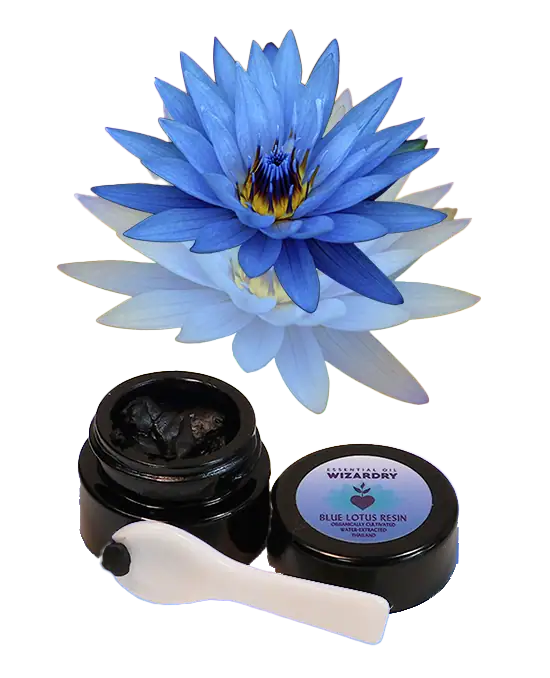
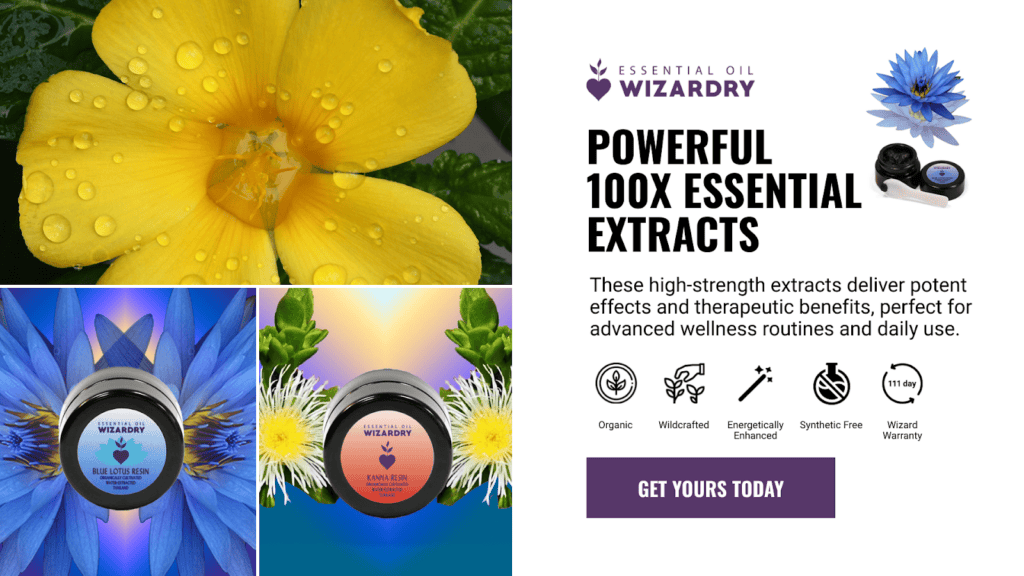
When selecting a concentrated blue lotus to work with, consider using a water extracted blue lotus concentrate such as Essential Oil Wizardry’s 100x Blue Lotus Resin. This is very powerful as it contains 100 grams of blue lotus flowers per gram of resin, yet users experience and report a very gentle quality from using this.
Starting Points By Format
For blue lotus tea, one to two grams of dried flower is a sensible starting range. For our concentrated blue lotus tincture, one to three drops is a typical beginner amount. For resin, a pea-sized amount is a common starting point. In each case, waiting the full absorption window of 20 to 45 minutes before considering any adjustment is important. Impatience is one of the most common contributors to an unpleasant experience with any botanical preparation.
Who Should Approach With Extra Care
Those who are pregnant, nursing, taking medications, or managing ongoing health concerns are encouraged to consult a qualified practitioner before working with blue lotus in any form. Blue lotus for anxiety or calming purposes is a popular use, but anyone in a sensitive period of life or health deserves personalized guidance rather than general advice. Our article on blue lotus for anxiety covers that dimension in more detail for those interested.
Practical Guidelines For A Considered Approach
Approaching blue lotus safely is less about following strict rules and more about bringing genuine attentiveness to the practice. Here are a few principles worth carrying into every session:
- Always start with the lowest suggested amount for your chosen format and observe fully before adjusting.
- Avoid combining concentrated blue lotus preparations on the same occasion, particularly as a beginner.
- Choose a comfortable, familiar setting where you feel at ease and have space to rest if needed.
- Do not use blue lotus alongside alcohol or other substances that affect the nervous system.
- Keep a simple record of your experiences to notice patterns and refine your approach over time.
A considered approach is not a fearful one. It simply reflects the same respect for the plant that has guided its use across centuries. For more on the plant’s broader character and history, our guide on what is blue lotus is a helpful foundation, and our article on blue lotus oil benefits explores the aromatic dimension for those drawn to that pathway.
Final Thoughts
Blue lotus side effects are most often the result of impatience or excess rather than the plant itself being problematic. Approached with care, appropriate blue lotus dosing, and genuine respect for its traditional roots, blue lotus remains one of the gentler botanical allies available. At Essential Oil Wizardry, we carry it with that understanding and encourage everyone in our community to bring the same thoughtfulness to their own practice.
Our products are best used within 2 to 5 years and stored away from heat, light, and air.
Frequently Asked Questions About Blue Lotus Side Effects
Is blue lotus safe to use?
Blue lotus has a long history of traditional use and is generally considered gentle when approached with appropriate amounts and personal discernment. Starting slowly and observing your responses is always the most thoughtful approach.
What are the most commonly reported blue lotus side effects?
Nausea, dizziness, and excessive sedation are the most frequently noted unwanted experiences, typically associated with using too much or combining concentrated preparations. Sometimes side effects are associated with mislabelled or residual solvent-laden blue lotus products. These usually resolve with rest.
Can blue lotus tea cause side effects?
Blue lotus tea is the gentlest preparation and the least likely to produce unwanted experiences when used in modest amounts. Sticking to one to two grams for a first session is a sensible starting point.
Who should avoid blue lotus?
Those who are pregnant, nursing, taking medications, or managing ongoing health concerns should consult a qualified practitioner before using blue lotus in any form.
Can blue lotus be combined with other botanicals?
Blue lotus pairs well with other gentle calming botanicals aromatically. Combining it with concentrated herbal preparations or substances that affect the nervous system is not recommended, particularly for beginners. More experienced herbalists and explorers may discover great synergies with time!
How do blue lotus effects differ by format?
Tea produces the gentlest and slowest-building effects. Tinctures act more quickly and with greater precision. Resin is the most concentrated and should be approached with the most care around dosing.
DISCLAIMER:
The information provided is intended for educational and informational purposes only and reflects historical, cultural, and experiential perspectives. It is not intended to diagnose, treat, cure, or prevent any disease, nor should it be interpreted as medical, legal, or professional advice. Individual experiences may vary. Always use personal discernment and consult a qualified professional when appropriate.
Sources:
- Samy, R. P., et al. (2008). Ethnobotany and phytopharmacology of Nymphaea species. Journal of Ethnopharmacology.
- Tisserand, R., & Young, R. (2014). Essential Oil Safety: A Guide for Health Care Professionals (2nd ed.). Churchill Livingstone.
- National Center for Complementary and Integrative Health. (n.d.). Aromatherapy. Retrieved from https://www.nccih.nih.gov/health/aromatherapy