


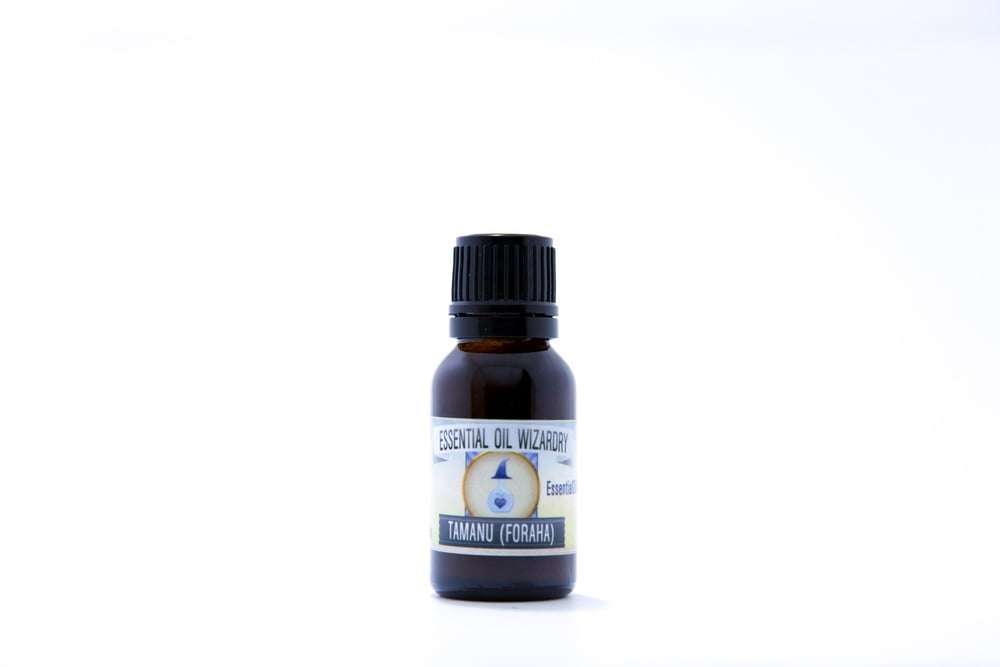
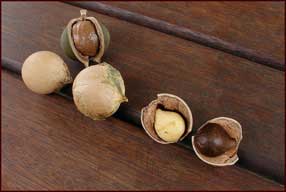
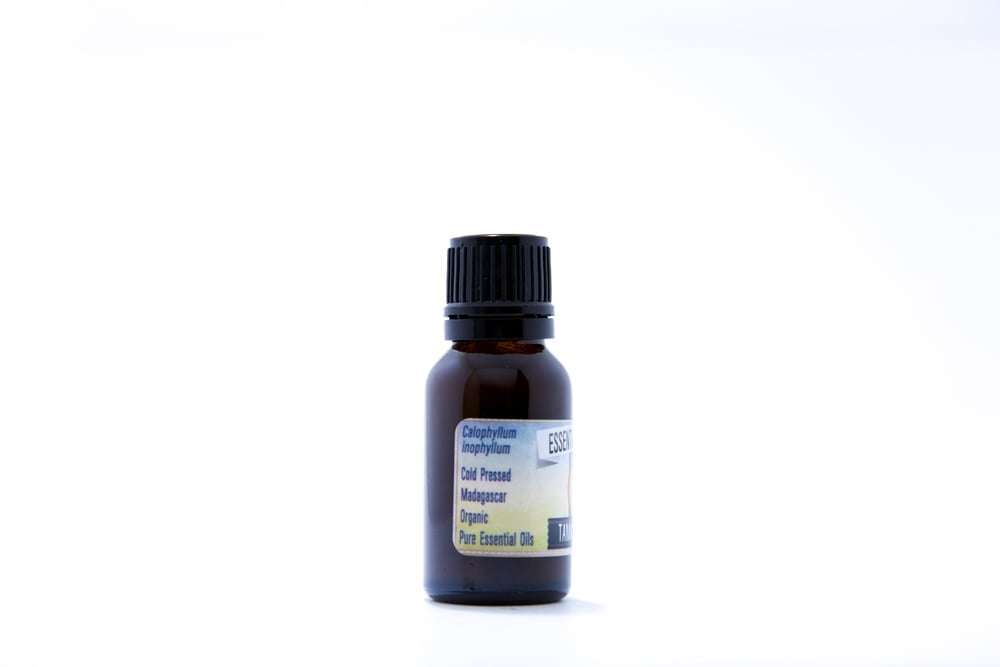
Tamanu (Foraha)
Price range: $25.00 through $55.00

Hidden
Product Description
Tamanu Oil (Carophyllum inophyllum)
Slightly spicy and nutty smelling, Tamanu oil (aka Foraha oil) is medicinally active as a carrier oil with potent wound healing, anti-inflammatory, and pain-relieving properties. Benefits of Tamanu Oil may include:
- Chapped lips
- Diaper rash
- Insect bites
- May reduce inflammation
- Overall skin radiance including facial application
- Rheumatism and gout
- Scabies and fungal infection (ring worm)
- Skin conditions (includes eczema and psoriasis)
- Shingles (50:50% w/ Ravensara aromatica per Kurt Schnaubelt)
- Sunburn
- Wound healing
Aromatic Scent: Warm, nutty, buttery, rich with vital fatty acids and waxes.
How to Use
Store in a cool place such as the fridge and shake or stir well before using due to thickness. Shelf-life is ~1-2 years from date of pressing (Adding Rosemary Antioxidant may increase the shelf life of this product reducing the oxidation breakdown as time progresses).
As a carrier oil, it may be applied undiluted or mixed with other carriers such as fractionated coconut oil, shea butter, jojoba oil, or beeswax for arthritic painful joints, wounds, scars, insect bites, eczema, a skin-enriching body butter or other skin afflictions (Aromatics International). In example tamanu oil vs rosehip seed oil, tamanu provides a thicker oil which will coat the top layer of the skin for longer, where Rosehip Seed oil may absorb into the skin more quickly.
Addition of essential oils in appropriate dilutions for enhancement of specific therapeutic properties can be done but is perhaps not needed depending on intended use. For example, consider adding a drop of two of Ravensara aromatica essential oil per teaspoon (5ml) of tamanu for relief of shingles (increased anti-viral potency) as suggested by Kurt Schnaubelt (who suggests a 50/50% ratio).
Safety
Due to phenylcoumarin content, caution when exposing skin to sunlight as photosensitive reactions (severe sunburns) may be possible.
Traditionally used for diaper rashes by some Fijian mothers, exercise extreme caution in applying to infants (we are not recommending this – only providing information that it has been done historically).
Careful if applying to face or for chapped lips as contact with mucous membranes (inside of mouth or on face close to eyes) is possible
Blends Well With: Arnica (CO2), Calendula (CO2), Copaiba, Evening Primrose (CO2), Helichrysum, Pomegranate Seed (CO2), Roman Chamomile
Cultivation: Wild
Country of Origin: S. Africa
Extraction Method: Cold-Pressed
Parts of Plant Used: Kernels
Constituents (Dweck 2002, Le Coz 2004)
Mainly lipids (fats), tamanu oil contains palmitic, stearic, oleic, linolenic acids, glycolipids, plant sterols, and phospholipids. Unique to Tamanu include the lipid Calophyllide, the lactones inocalophyllins and inophyllum and phenylcoumarins
References
Dweck AC, Meadows T. Tamanu (Calophyllum inophyllum) - the African, Asian, Polynesian and Pacific Panacea. Int J Cosmet Sci. 2002 Dec;24(6):341-8. doi: 10.1046/j.1467-2494.2002.00160.x.
Le Coz CJ. Allergic contact dermatitis from tamanu oil (Calophyllum inophyllum, Calophyllum tacamahaca). Contact Dermatitis. 2004 Oct;51(4):216-7
Aromatics International. Tamanu (Foraha) Oil Certified Organic. Accessed 4/27/14 from http://www.aromaticsinternational.com/tamanu-foraha
Natural Standard. Tamanu (Carophyllum inophyllum L) Professional monograph. Accessed 4/27/14
Dr. Nick's Notes
Tamanu Oil (aka Foraha oil) has been utilized by many cultures for skin supportive and wound healing properties. The oil itself originates from the dried nuts found inside Calophyllum inophyllums’ fruit, which have a very high oil (60% w/w after drying) content that can range from caramel to bluish-green depending on the season of harvest.
Rich in lipid content, tamanu oil also contains constituents unique to the plant that confer therapeutic properties. For example, calophyllide and inophyllum have been shown to have anti-arthritic, anti-inflammatory properties at a potency level similar to the corticosteroid hydrocortisone. Inophyllum is active against HIV-1 reverse transcriptase and Epstein Bar Virus (Herpesviradae family) suggesting anti-viral properties and phenylcoumarin derivatives have anti-tumour activity (Dweck 2002, Le Coz 2004). While there has been 1 reported case of allergic contact dermatitis to tamanu oil, 30 others tested showed no reaction suggesting allergic reaction is possible but not common (Le Coz 2004).
Our Tamanu oil is phenomenal as a therapeutic healing carrier oil with its thick viscocity and robust nuttiness. After long days in the sun leading to fairly red (pink) sunburnt skin, using pure tamanu has quickly repaired (worked overnight for me) the pink skin leaving a more lucious brown tan, similar to the caramel color it exudes. I’ve had fun experimenting with Tamanu and have created a very pleasant botanical after sun glow oil which I call Tropical Sun Glow (discontinued).
FAQs
Tamanu oil (Calophyllum inophyllum) is a rich, dark green carrier oil cold-pressed from the nut of the tamanu tree, native to Southeast Asia and the Pacific Islands. It has been used for centuries in Polynesian, Melanesian, and Southeast Asian folk medicine as a powerful skin healer, and is one of the few carrier oils with documented anti-inflammatory, antimicrobial, and tissue-regenerating properties. Essential Oil Wizardry sources high-quality tamanu oil for use as both a standalone skin treatment and a therapeutic carrier for essential oil blends.
Tamanu oil is uniquely rich in calophyllolide, a compound studied for its anti-inflammatory and wound-healing activity. It is traditionally used for acne, scars, stretch marks, eczema, psoriasis, burns, insect bites, and general skin regeneration. Unlike many carrier oils, tamanu has demonstrated antimicrobial activity against several bacterial and fungal strains, making it especially useful for blemish-prone or damaged skin.
Tamanu oil can be applied directly to the skin as a spot treatment for scars, blemishes, or irritation, or used as a carrier oil for diluting essential oils at standard dilution rates. It has a thick, rich texture and a distinctive nutty, herbaceous aroma. For facial use, apply a few drops to clean skin or blend with a lighter carrier like jojoba. It also works well as a base for wound-healing or anti-aging essential oil blends. Some highly recommend blending with helichrysum essential oil for maximum benefit.
Yes — tamanu is an excellent therapeutic carrier oil, especially for blends targeting skin repair, inflammation, or pain. Its own bioactive compounds work synergistically with essential oils like frankincense, helichrysum, lavender, and tea tree. For a comprehensive skin-healing blend, combine tamanu with EOW’s Helichrysum Essential Oil and Frankincense Sacra at a 2–5% dilution
Yes — tamanu oil has a distinctive nutty, herbaceous, and slightly earthy aroma that is noticeably different from neutral carrier oils like jojoba or fractionated coconut. Some users find the scent strong at first. It mellows when blended with essential oils or mixed with a lighter carrier. The scent is part of what makes tamanu unique — it reflects the oil’s rich bioactive compound profile.
Our Process
We consciously source all our ingredients from Organic, Wildcrafted and/or Unsprayed (Pesticide-free) farms & distilleries. We then enhance these premium ingredients through our unique proprietary process to bring each of our formulations into their highest expression. You can really smell, feel, sense, and experience the difference!

** The information provided on this page is intended for educational and informational purposes only and reflects historical, cultural, and experiential perspectives. This product has not been evaluated or approved by the U.S. Food and Drug Administration and is not intended to diagnose, treat, cure, or prevent any disease. Individual experiences may vary. Always use personal discernment and consult a qualified healthcare professional when appropriate, especially if you are pregnant, nursing, taking medication, or have a medical condition.
Reviews