


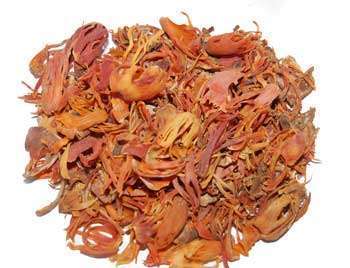
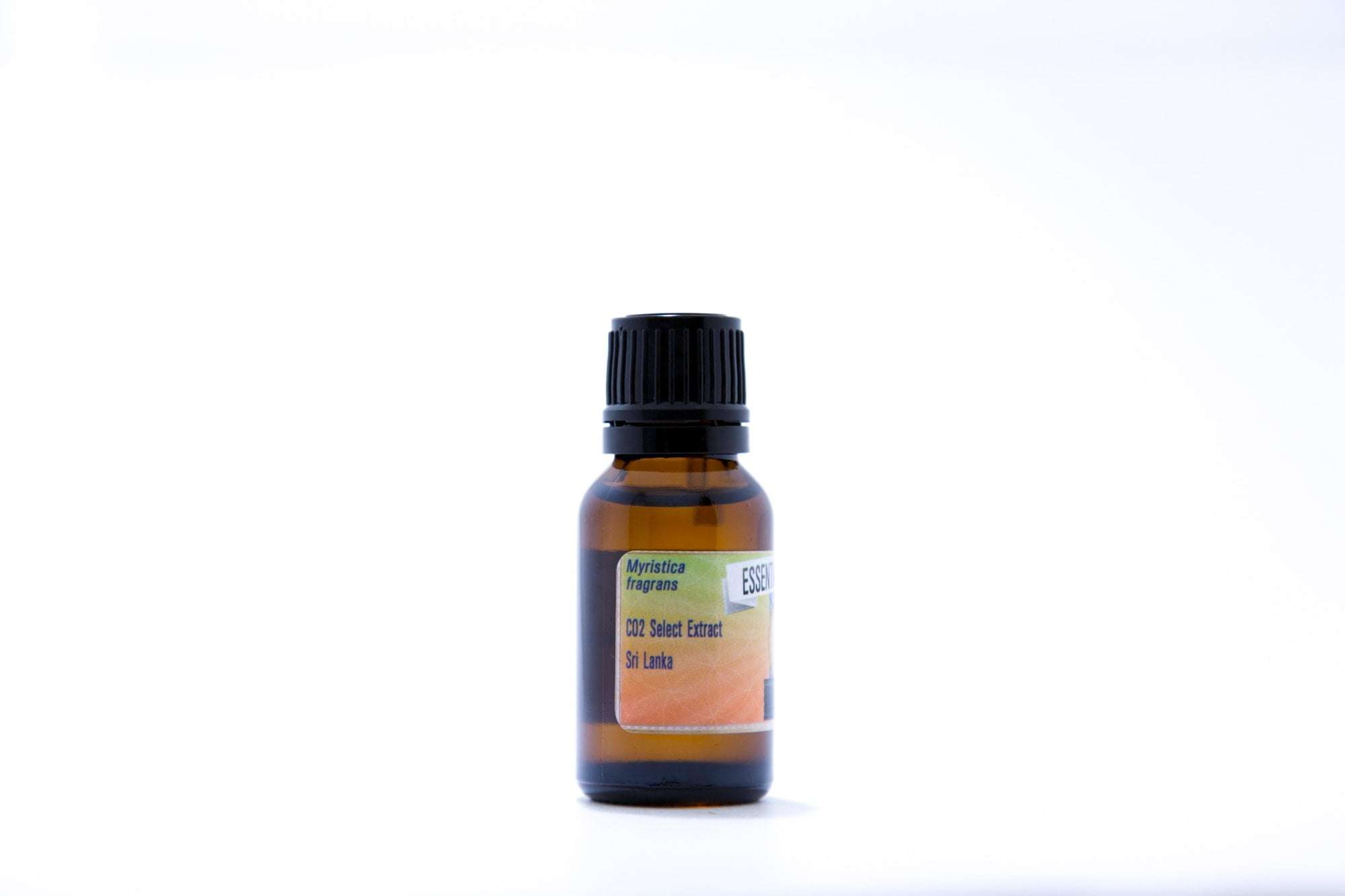
Mace
Price range: $30.00 through $35.00

Hidden
Featured Media
Product Description
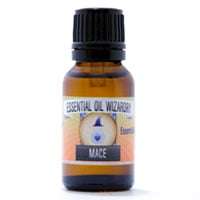
Mace oil (Myristica fragrans)
Mace oil is produced by the outer layer of the nutmeg fruit, deeply warm spicy notes shrouded in mystery which adds a layer to natural perfumery and provides topical relief of aches and pains.
- Analgesic
- Anti-inflammatory (muscles, joints)
- Antioxidant
- Antispasmodic (?)
- Carminative (reduces gas)
- Natural Perfumery
- Oral Care
- Stimulant (mood, circulation, sexual)
- Toothaches
- Warms body (topical use only)
Aromatic Scent: Intense bright tropical spice, alike Allspice, cinnamon & nutmeg, bright and warm aroma complex.
How to Use
- Applied topically, dilute well and apply to areas of concern ~ Best blended with other oils.
- Works wonderfully in a massage blend for arthritis, rheumatism, muscular aches and pains by increasing blood circulation and reducing inflammation.
- Rub over the stomach in a clockwise fashion for digestive complaints of nausea, diarrhea, bloating and cramping caused by gas in the stomach and intestines.
- Need a mental boost for cognitive focusing tasks? Try massaging into the scalp and back of the neck – take care not to get into the eyes!
- May be added into mouthwash or oral tooth care products for its antiseptic & anti-inflammatory properties to control bacteria, ease toothaches and assist with halotosis (bad breath)
Historical Notes
Myristica fragrans which produces nutmeg fruit and mace arils are native to the Moluccas or Spice Islands. These products have been used for centuries in Chinese, and Ayurveda medicine as a remedy for digestive troubles such as flatulence, stomach pains and cramps, diarrhea, nausea and loss of appetite. In the 18th Century, it was classified by the French as a cardiac tonic and stimulant for physical and mental fatigue.
Safety Summary
Hazards: Potentially carcinogenic, based on safrole and methyleugenol content; may be psychotropic. Used in large doses shows signs of toxicity such as nausea, stupor and tachycardia, believed to be due to the myristicin content “Large quantities are hallucinogenic and excitant to the motor cortex.’’ (British Herbal Pharmacopoeia 1983, p. 148)
Contraindications: Avoid during pregnancy or breastfeeding.
Maximum Dermal Use level: 2% for East Indian oil, 4.1% for Indian oil.
Not recommended for internal use due to safrole/methyleugenol
~ Adopted from Tisserand & Young, Essential Oil Safety, 2nd ed. 2013 ~
Blends Well With: Allspice (CO2), Balsam of Peru, Bergamot, Black Pepper, Cacao Absolute, Cedar, Citrus oils, Clary Sage, Clove, Frankincense Carterii (CO2), Frankincense Serrata (CO2), Galbanum (CO2), Rose-Geranium, Laurel, Lavandin, Lavender, Lemon, Mace, Melissa, Mimosa Absolute, Nagarmotha, Neroli, Oakmoss, Patchouli, Rosemary, Sandalwood, Vetiver, Ylang Ylang, and other spice oils.
Cultivation: Organic
Country of Origin: Sri Lanka | Indonesia
Extraction Method: Steam Distilled OR CO2 Extract
Parts of Plant Used: Aril (a red netlike husk covering the nutmeg seed)
Note Classification: middle note
Largest Producing Countries: Grenada and Indonesia
Traditional Use: digestive and kidney issues
Constituent Range (Forrest et al 1972, Lawrence 1995, p 202 and 2000c, p. 6-68)
East Indian
α-Pinene (16.3-26.7%)
β-Pinene (10.6-20%)
Sabinene (12.5-14.5%)
Terpine-4ol (4.4-14%)
γ-Terpinene (4.9-11.6%)
β-Phellandrene 1,8-cineole (4.9-11.6%)
( )-Limonene (4.2-9.4%)
α-Terpinene (4.8-7.5%)
Myristicin (1.3-3.8%)
Elemicin (0.2-2.0%)
Safrole (0.2-1.9%)
α-Terpineol (0.7-1.2%)
Methyleugenol (0.1-0.2%)
Isoeugenol (0-0.1%)
(Forrest et al 1972; Lawrence 1995g p. 202)
Indian
β-Pinene sabinene (45.5%)
α-Pinene (15.2%)
1,8 Cineole ( )-limonene (7.0%)
Myristicin (5.9%)
Terpinen-4-ol (4.5%)
α-Terpinene p-cymene (3.5%)
α-Phellandrene (3.2%)
Elemicin (3.1%)
β-Phellandrene (2.8%)
γ-Terpinene (1.8%)
Safrole p-cymen-8-ol (0.7%)
Methyleugenaol (.02%)
(Lawrence 2000c p. 6-68)
This information was documented by Lawrence 1995, p 202 and 2000c, p. 6-68, published by Robert Tisserand and Rodney Young in 2013 and is posted to demonstrate some general range of chemical constituents of this essential oil. Each distillation and plant source varies and the current batch will likely have some variance to the information published above. When possible, we will post current GC-MS analysis separately for our oils sold on this site, with correlating batch numbers for your enjoyment and awareness.
References
- Lawless, J. The Encyclopedia of Essential Oils, San Francisco: Conari Press, 2013
- Orabi KY, Mossa JS, el-Feraly FS. Isolation and characterization of two antimicrobial agents from mace (myristica fragrans). J Nat Prod. 1991 May-Jun;54(3):356-9.
- Ozaki Y, Soedigdo S, Wattimena YR, Suganda AG Antiinflammatory effects of mace, aril of Myristica fragrans Houtt., and its active principles. Japanese Journal of Pharmacology 1989, 49(2):155-163.
- Tisserand, Robert, and Rodney Young. Essential Oil Safety. Second ed. Churchill Livingstone
Dr. Nick's Notes
Mace oil is a new treat for me to experiment with. Initially given a choice I opted for the nutmeg, CO2 select of course. Out of the bottle, mace comes out more intense with sweet warm intoxicating waves ~ perhaps to much? For the first few months, it sat on my shelf lonely without any people or companions to play with. When I noticed a 10 mL bottle I had packaged, I decided to open it and experiment with it on my body, which was sore this evening.
Mace oil’s fragrance is less subdued compared to nutmeg, like someone spilled the secret out of the bottle and it smells very tropical and exotic. Rich warm aromatic notes which are both intense and sensual – initially, I wondered if this was a bit too overpowering for me. I dropped a fair amount of mace into my hands and massaged into my shoulders, neck and lower back undiluted. Within five minutes, I noticed how much more physical space my tightened muscles seemed to gain and eased into my dance which I thoroughly enjoy the use of nutmeg for.
Compared to nutmeg oil, mace oil seems to be more powerful subjectively than steam-distilled nutmeg for reducing aches, pains and has an increased warming effect. I have yet to cross-reference CO2 extracted nutmeg with mace but believe that mace might be more potent for the above purposes.
In summary, mace oil may be more effective for warming the body, increased tingling sensations and aches/pains. Nutmeg is a more balanced as a natural perfuming agent, warming and pleasant. I believe mace essential oil may have more dermal irritation than nutmeg oil and will be less tolerated on a larger sample size. These are my thoughts, on a simply wondrous adventure known as mace…
FAQs
Mace essential oil is steam distilled from the dried outer covering, known as the aril, that surrounds the nutmeg seed inside the Myristica fragrans fruit. Nutmeg oil is distilled from the inner seed itself. Both come from the same plant but have different aromatic profiles. Mace oil is generally considered lighter, brighter, and more delicate than nutmeg oil, with a warm spice character that is more nuanced and less overwhelming. Mace is rarer and often more prized in perfumery for its refined spice quality.
Mace has a warm, spicy aroma that is similar to nutmeg but noticeably lighter and more refined. There is a sweet warmth to it with a slightly floral or balsamic undertone that makes it more complex and interesting than you might expect from a kitchen spice. It shares the nutmeg family's signature warmth and richness but wears it more elegantly, making it particularly appealing in perfumery applications.
Mace is a warming and stimulating oil in aromatherapy. It is used to support circulation, ease muscular discomfort when applied topically in dilution, and promote feelings of warmth and vitality. Like nutmeg, it has a traditional reputation as a digestive support oil. In emotional aromatherapy, mace's warm, comforting quality can help lift fatigue, ease stress, and create a sense of inner warmth and resilience during cold or difficult times. Note that the CO2 extract is even more potent and intense, especially compared to nutmeg and steam distilled mace when applied to the body for circulation or muscles.
Mace is a beautiful spice note in natural perfumery that adds warmth and sophistication without the heaviness of some other spice oils. It functions as a heart note and blends beautifully with other warm spices like cardamom, clove, and cinnamon, as well as with florals like rose and jasmine where it adds a warming, exotic spice contrast. For oriental or gourmand compositions, try combining it with vanilla, benzoin, and sandalwood. Start with small amounts as spice oils can dominate a blend quickly.
Mace essential oil should always be diluted before skin application. It contains compounds like myristicin and elemicin that can cause sensitization or irritation if used in high concentrations or undiluted. A dilution of 0.5 to 1 percent in a carrier oil is appropriate for skin use. Avoid use during pregnancy. Always do a patch test before wider application, and avoid use on sensitive or broken skin.
Our Process
We consciously source all our ingredients from Organic, Wildcrafted and/or Unsprayed (Pesticide-free) farms & distilleries. We then enhance these premium ingredients through our unique proprietary process to bring each of our formulations into their highest expression. You can really smell, feel, sense, and experience the difference!
** The information provided on this page is intended for educational and informational purposes only and reflects historical, cultural, and experiential perspectives. This product has not been evaluated or approved by the U.S. Food and Drug Administration and is not intended to diagnose, treat, cure, or prevent any disease. Individual experiences may vary. Always use personal discernment and consult a qualified healthcare professional when appropriate, especially if you are pregnant, nursing, taking medication, or have a medical condition.
Reviews