


Key Takeaways:
- Blue Lotus Has Been Valued For Thousands Of Years: The ancient Egyptian blue lotus was not a relic of curiosity but a living part of religious, ceremonial, and daily life, prized for its calming, presence-supporting character.
- Its Perks Are Experiential Rather Than Medicinal: Blue lotus flower benefits are most accurately understood through the lens of atmosphere, mood, and inner quality rather than clinical outcomes.
- Modern Use Honors Ancient Tradition: The ways people work with blue lotus today, through tea, tincture, oil, and ceremony, reflect a continuity of intention that stretches back millennia.
Blue lotus is a flower that opens with the sun and closes at dusk. It has floated through the most significant moments of ancient Egyptian civilization, appears in temple carvings and royal rituals, and continues to draw people across millennia. Blue lotus is not simply a plant that happens to be old. It is a plant whose enduring presence in human life reflects something genuinely worth attending to.
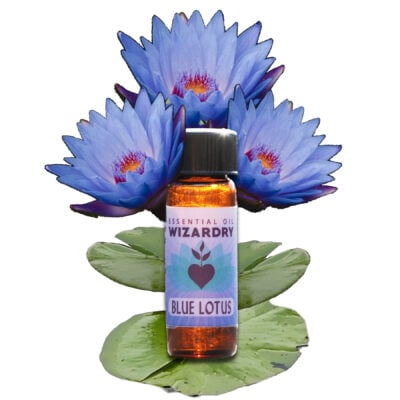
At Essential Oil Wizardry, we carry blue lotus because we believe this flower’s long history of human relationship is part of its value, not incidental to it. Founded by a holistic-minded, retired pharmacist, our work honors traditional botanical wisdom alongside a commitment to sourcing integrity that never wavers. More than 95% of what we carry is organic or wildcrafted, unsprayed, and vibrationally enhanced using energetic tools, ORMUS, and BioGeometry.
In this article, we will share the story of blue lotus, what the blue lotus benefits are understood to offer, and how ancient traditions connect to the ways people work with this flower today.
Blue Lotus History: A Flower At The Heart Of Ancient Civilization
Nymphaea caerulea was not a peripheral plant in ancient Egypt. Rather, it was woven into the fabric of one of history’s most sophisticated civilizations, across religious, artistic, ceremonial, and personal life. Its image appears in tomb paintings, temple reliefs, royal offerings, and everyday household objects with a frequency that speaks to reverence. In fact, blue lotus petals were found scattered across the body of Tutankhamun when his tomb was opened in 1922, steeped in wine, woven into garlands, and held close during ritual.
In Egyptian cosmology, the blue lotus was associated with Ra, the sun god, and the concept of creation itself. Ancient texts describe the first lotus rising from the primordial waters at the beginning of time, opening to reveal the sun within its petals, connecting the flower to rebirth, renewal, and the daily cycle of emergence that Egyptians understood as the foundation of all life.

Ancient Egyptian Blue Lotus: Valued Beyond Symbolism
The ancient Egyptian blue lotus was not valued purely for its symbolic associations. It was also worked with experientially, incorporated into ritual preparations and ceremonial contexts where its calming, awareness-softening character could be felt directly. This dual dimension of meaning and experience is part of what made blue lotus so central to Egyptian life, and part of what continues to draw people to it today.
Its naturally occurring alkaloids are frequently referenced in botanical literature as one reason the plant has long been associated with relaxed, open states of awareness, though the science remains largely anecdotal and individual responses vary considerably. What is clear from the historical and ethnobotanical record is that blue lotus was regularly approached as a companion to presence and inner opening rather than a tool for dramatic effect.
Blue Lotus Flower Benefits: What People Notice
The benefits of the blue lotus flower are best understood as experiential rather than clinical. The plant does not promise outcomes. Rather, it creates favorable conditions for stillness, openness, and an inner ease that unfolds gradually and rewards attentiveness.
What People Notice When They Work With It
People who work with blue lotus tend to describe similar qualities: a softening of mental noise, a deepening of sensory awareness, and a settled, present quality that feels distinct from ordinary waking consciousness without being overwhelming or disorienting. Dr. Nick describes the experience as soft and clear, with a gentle, floaty quality that opens rather than dulls, calming without heaviness.
Why Individual Experience Varies
These descriptions have remained remarkably consistent across cultures and centuries of use, which itself speaks to something real in the plant’s character. That said, these remain anecdotal observations, and individual experiences vary considerably based on preparation, setting, and intention. For those drawn to blue lotus specifically for moments of tension or inner restlessness, our dedicated article on blue lotus for anxiety goes into this dimension in greater depth. And for a closer look at the aromatic and energetic qualities specific to the oil, our resource on blue lotus oil benefits is a helpful companion read.

Blue Lotus Modern Uses: Continuity Across Centuries
The continuity between ancient and modern blue lotus use is striking. The same qualities that made this flower valuable in Egyptian temple rituals, namely its capacity to soften mental activity, deepen presence, and support a more receptive quality of awareness, are precisely what people seek from it today. Here are the most common ways people incorporate blue lotus into a contemporary practice:
- Blue Lotus Tea: This is a slow, deliberate evening ritual before meditation or rest. One to two grams of dried flower steeped for five to ten minutes produces a lightly floral, mildly sweet infusion that many find settling.
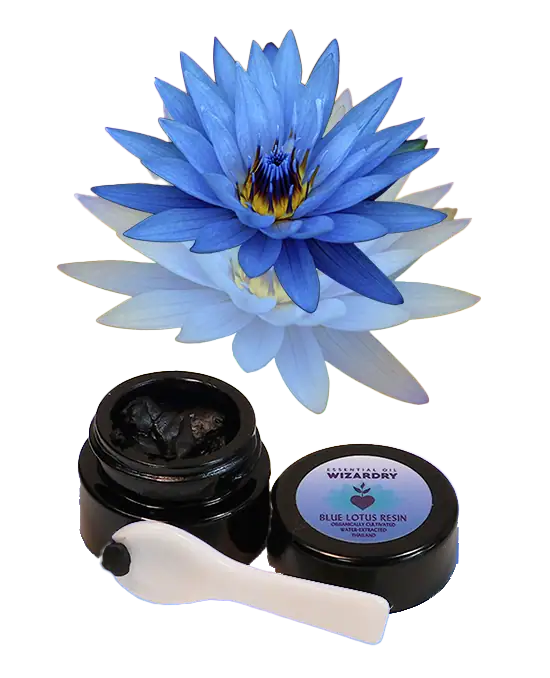
- Diffusing Blue Lotus Absolute: This act helps to shift the aromatic atmosphere of a space before contemplative practice. Its honey-sweet, richly floral, subtly earthy aroma is one of the most evocative in the botanical world. Do note that some diffusers are not compatible with Blue Lotus Absolute, as the extract is very thick. People enjoy wearing this, infused into a carrier oil. Some community members will ceremonially vaporize the oil, heating it up and breathing it into the lungs, for a special experience.
- Tinctures And Concentrated Extracts: For a more precise and powerful engagement with the plant’s character, one to three drops taken in warm water or tea offers a convenient and travel-friendly starting point.
- Dried Blue Lotus Petals: Botanicals can easily be incorporated into altar arrangements, ceremonial spaces, or slow floral honey infusions.
- Layered Rituals: You can combine scent, intentional breathwork, and movement for a more immersive practice.
For practical guidance on getting started with any of these approaches, our guide on how to use blue lotus covers each format in accessible detail. And for those who want clear starting points around amount and frequency, our blue lotus dosing guide offers grounded, practical support.
How To Work With Blue Lotus Intentionally
Blue lotus is most meaningful when it becomes part of a consistent practice. Its subtler qualities tend to deepen with familiarity, so the more regularly you show up to the practice, the more it shapes the quality of awareness you bring to it. Here are a few principles worth carrying forward.
- Start Smaller Than You Think You Need To: The absorption window varies by format, so give each preparation time to arrive before deciding it hasn’t worked. 30 to 60 minutes is a minimum, not a suggestion.
- Create A Container For The Experience: We recommend using it on a quiet evening in a familiar environment, on a day when you have minimal obligations. Setting shapes the experience as much as the preparation itself, and blue lotus meets intention, and intention lives in the space you create.
- Keep A Simple Record: Note the format, the amount, the time, and what you noticed. Not every session will feel remarkable, but over weeks, patterns emerge that no general guideline could have told you in advance.
- Allow Space Between Sessions: Two to four times per week tends to support a clear, attentive relationship with the plant without habituating too quickly to its subtler qualities.
Ultimately, the plants that reward patience tend to be the ones most worth staying with.
Final Thoughts
Blue lotus benefits are inseparable from blue lotus history. The plant’s value was not invented by modern wellness culture. It was recognized, refined, and passed forward through thousands of years of human engagement. At Essential Oil Wizardry, we carry blue lotus because we believe that kind of continuity is worth honoring, and that the people drawn to this flower today are part of a lineage much longer than any of us.
Frequently Asked Questions About Blue Lotus Benefits
What are the main blue lotus benefits?
Blue lotus benefits are most accurately described in experiential terms: a softening of mental activity, a deepening of sensory presence, and a calming, gently opening quality of awareness. These have been described consistently across cultures and centuries of use.
Are blue lotus products safe?
Blue lotus products should be approached with respect, intention, and personal discernment. They are not suitable for pregnant or nursing women or children. Always start with the smallest possible amount and consult a qualified professional if you have any health concerns.
What did ancient Egyptians use blue lotus for?
The ancient Egyptian blue lotus was used in religious ceremonies, royal rituals, and personal practices. It was associated with creation, rebirth, and the solar cycle, and was incorporated into preparations valued for its calming and awareness-supporting character.
How is blue lotus used today?
Blue lotus modern uses include tea, essential oil diffusion, tinctures, concentrated extracts, and ceremonial practice. The common thread across all these formats is an orientation toward presence, stillness, and intentional inner exploration.
Is blue lotus the same as the sacred lotus?
No. Blue lotus (Nymphaea caerulea) is a water lily distinct from Nelumbo nucifera, the pink or white sacred lotus more commonly associated with Buddhist iconography. They are different plants with different cultural lineages and aromatic profiles.
How long has blue lotus been used by humans?
Blue lotus has been documented in ancient Egyptian art, religious texts, and ceremonial objects for at least 3,000 years, making it one of the most well-documented sacred botanicals in the world.
Is blue lotus appropriate for daily use?
Many people incorporate blue lotus two to four times per week rather than daily. This rhythm supports a clear, attentive relationship with the plant’s qualities without overdoing it.
DISCLAIMER:
The information provided is intended for educational and informational purposes only and reflects historical, cultural, and experiential perspectives. It is not intended to diagnose, treat, cure, or prevent any disease, nor should it be interpreted as medical, legal, or professional advice. Individual experiences may vary. Always use personal discernment and consult a qualified professional when appropriate.