


Key Takeaways
- One Of The World’s Most Revered Aromatic Materials: Oud essential oil, derived from agarwood, has been used in ceremony, sacred space, and personal adornment across Middle Eastern, South Asian, and East Asian cultures for centuries.
- A Presence Unlike Any Other: Oud’s deeply complex, resinous, and animalic aroma sets it apart from virtually every other botanical oil, making it a transformative addition to meditation, ritual, and natural perfumery.
- Quality And Sourcing Define The Experience: True agarwood oil is rare and varies enormously in character depending on species, region, and extraction. Choosing a trustworthy source matters more with oud than with almost any other botanical.
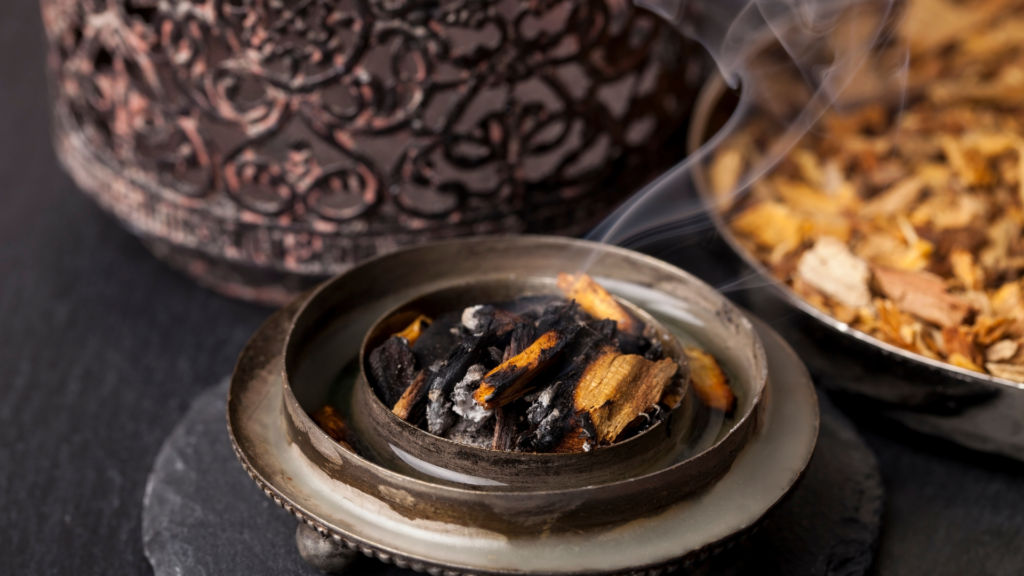
There are scents that change the quality of a room simply by being opened; oud is one of them. Rich, resinous, animalic, warm, and layered with something ancient and alive, it arrives in a way that commands attention without asking for it. Small wonder that it has been one of the most prized aromatic materials in human history, burning in temples, anointing royalty, and anchoring some of the world’s most enduring fragrance traditions.
At Essential Oil Wizardry, we approach oud with the reverence this material deserves. Founded by a holistically-minded retired pharmacist, our work is grounded in respect for botanical tradition and a refusal to compromise on sourcing integrity. More than 95% of what we carry is organic or wildcrafted, unsprayed, and vibrationally enhanced using energetic tools, ORMUS, and BioGeometry.
In this article, we will share the story behind agarwood oil, how oud has been used ceremonially and meditatively across cultures, and how to bring it into your own practice through diffusion, ritual, and natural perfumery.
The Origins Of Agarwood Oil And Its Cultural Lineage
Oud essential oil is derived from agarwood, the resin-saturated heartwood of Aquilaria trees, most commonly Aquilaria malaccensis and related species native to South and Southeast Asia. What makes agarwood remarkable, and extraordinarily rare, is that it only forms when the tree is infected by a specific mold. The tree responds by producing a dense, dark, aromatic resin as a defense mechanism. This infected wood, which can take even decades to develop, is what yields one of the most complex and coveted aromatic materials on earth. When analyzed on a GC-MS for Oud’s chemical composition, it expresses very complex signatures and unique constituents only found within this plant’s alchemy.
In Arabic, oud simply means wood. But in the cultures that have prized it longest, it carries a weight far beyond its name. It has been burned as incense in mosques and temples, used to scent clothing and hair in Gulf cultures, and incorporated into sacred ritual across India, Japan, China, and beyond. Fancy, high-ticket perfumes are enamored with adding just a touch of its wild essence to complete its recipe.
Why Oud Has Been Associated With Sacredness And Ceremony
Across nearly every culture that has worked with oud, it has been connected to the sacred. Its deeply grounding, expansive aroma seems to invite a kind of inner quieting that makes it particularly well-suited to prayer, meditation, and ceremony. Many traditions specifically reserved it for spiritual contexts, understanding intuitively what practitioners still describe today: that oud’s presence shifts the quality of awareness in a room. Our full collection of ceremonial essential oils reflects this understanding, featuring botanicals chosen specifically for their depth in ritual and contemplative settings.
Oud Essential Oil For Meditation And Sacred Space
Oud’s role in meditation is not incidental. Its deeply grounding, enveloping character creates an aromatic environment that supports the kind of inward attention that contemplative practice calls for. Where lighter, brighter oils might stimulate and elevate, oud draws down and anchors. It creates a sense of gravity and presence that many meditators describe as transformative.
A single drop of oud diffused in a small space, or applied diluted to the wrists or sternum before a practice, can shift the entire quality of a session. Its aroma persists long after most other oils have faded, holding the ceremonial space open for the duration of a sit or a ritual. Note that oud is very thick and may not be compatible with all diffusers.
Pairing Oud With Other Botanicals For Meditation
Oud pairs exceptionally well with other grounding and resinous botanicals in a meditation context. Frankincense is perhaps its most natural companion, adding a bright, elevating quality that balances oud’s denser earthiness. Sandalwood brings a warm, creamy depth that softens the blend. Rose or neroli can add a heart-opening quality when working with emotional themes in practice. Our guide on essential oils for meditation covers a wider range of aromatic options for those building a contemplative botanical practice.
Oud Perfume And Natural Perfumery Applications
Beyond ceremony and meditation, oud holds a central place in the world of natural perfumery. As a base note, it provides extraordinary depth, tenacity, and complexity that few other materials can match. A well-sourced oud perfume oil can evolve on the skin for hours, revealing different facets of its character as it warms and opens.
Here are a few ways to work with oud in a personal perfumery context:
- Use oud as the base note anchor in a personal oil blend, pairing it with floral or citrus top notes to balance its heaviness.
- Apply a single undiluted drop to a piece of fabric or wood for a slow-release aromatic experience throughout the day.
- Blend oud with rose absolute and sandalwood for a classic Middle Eastern-inspired fragrance profile.
- Explore its character alone on the skin before adding other oils, allowing time to observe how it evolves.
- Layer oud beneath a lighter aromatic as a fixative, extending the life and depth of the overall blend.
- Try combining oud into organic honey spirits as a base, to extend and deepen its aroma on the skin for many hours without changing its botanical tone with other extracts.
For those drawn to oud in a perfumery context, our guide on best absolute extracts for perfumery covers complementary materials that pair beautifully with oud in a botanical fragrance practice. Our Agarwood Essential Oil Oud Oil page has full details on the specific preparation we carry.

Final Thoughts
Oud essential oil is one of the most extraordinary aromatic materials on earth, and its value goes far beyond its price. It carries within it the accumulated wisdom of centuries of ceremonial, spiritual, and perfumery tradition. At Essential Oil Wizardry, we carry oud because we believe that kind of depth deserves to be met with genuine care, from sourcing to storage to the hands it eventually reaches. Our oils are best used within 2 to 5 years and stored away from heat, light, and air.
Frequently Asked Questions About Oud Essential Oil
What is oud essential oil?
Oud essential oil is derived from agarwood, the resin-saturated heartwood of Aquilaria trees. It forms only when the tree responds to a specific fungal infection, producing a dense, dark aromatic resin that takes decades to develop. The resulting oil is one of the most complex and prized aromatic materials in the world.
What does oud smell like?
Oud has a deeply complex aroma that is simultaneously woody, resinous, sweet, earthy, and slightly animalic. It is warm and enveloping, with layers that reveal themselves gradually over time on the skin or in a blend. Each batch of oud is unique and there are different expressions from the extraction method, preparation process, and country of origin.
How is oud used in meditation?
Oud is diffused or applied diluted to pulse points before a meditation session to create a grounding, anchoring aromatic environment. Its deeply settling character supports inward attention and a quality of presence that many practitioners describe as uniquely supportive. We highly recommend making your own meditation blend and using Oud as a powerful ingredient – see our Crown Chakra oil for inspiration!
Is oud suitable for natural perfumery?
Yes. Oud is one of the most valued base notes in natural perfumery, providing extraordinary depth, complexity, and tenacity. It anchors a blend and evolves beautifully on the skin over several hours.
Why is oud so expensive?
Genuine agarwood only forms in trees infected by a specific mold, a process that takes decades. The rarity of this infected wood, combined with the labor-intensive extraction process and high global demand, makes oud one of the most expensive botanical materials in the world.
How should oud essential oil be stored?
Store in a dark glass bottle away from heat, light, and air. Proper storage preserves oud’s complex aromatic profile. Our oud is best used within 2 to 5 years of purchase.
DISCLAIMER:
The information provided is intended for educational and informational purposes only and reflects historical, cultural, and experiential perspectives. It is not intended to diagnose, treat, cure, or prevent any disease, nor should it be interpreted as medical, legal, or professional advice. Individual experiences may vary. Always use personal discernment and consult a qualified professional when appropriate.
Sources:
- Antonopoulou, M., et al. (2010). Agarwood: The life of Aquilaria. Journal of Agricultural Technology.
- Sell, C. S. (2006). The Chemistry of Fragrances: From Perfumer to Consumer. Royal Society of Chemistry.
- Tisserand, R., & Young, R. (2014). Essential Oil Safety: A Guide for Health Care Professionals (2nd ed.). Churchill Livingstone.