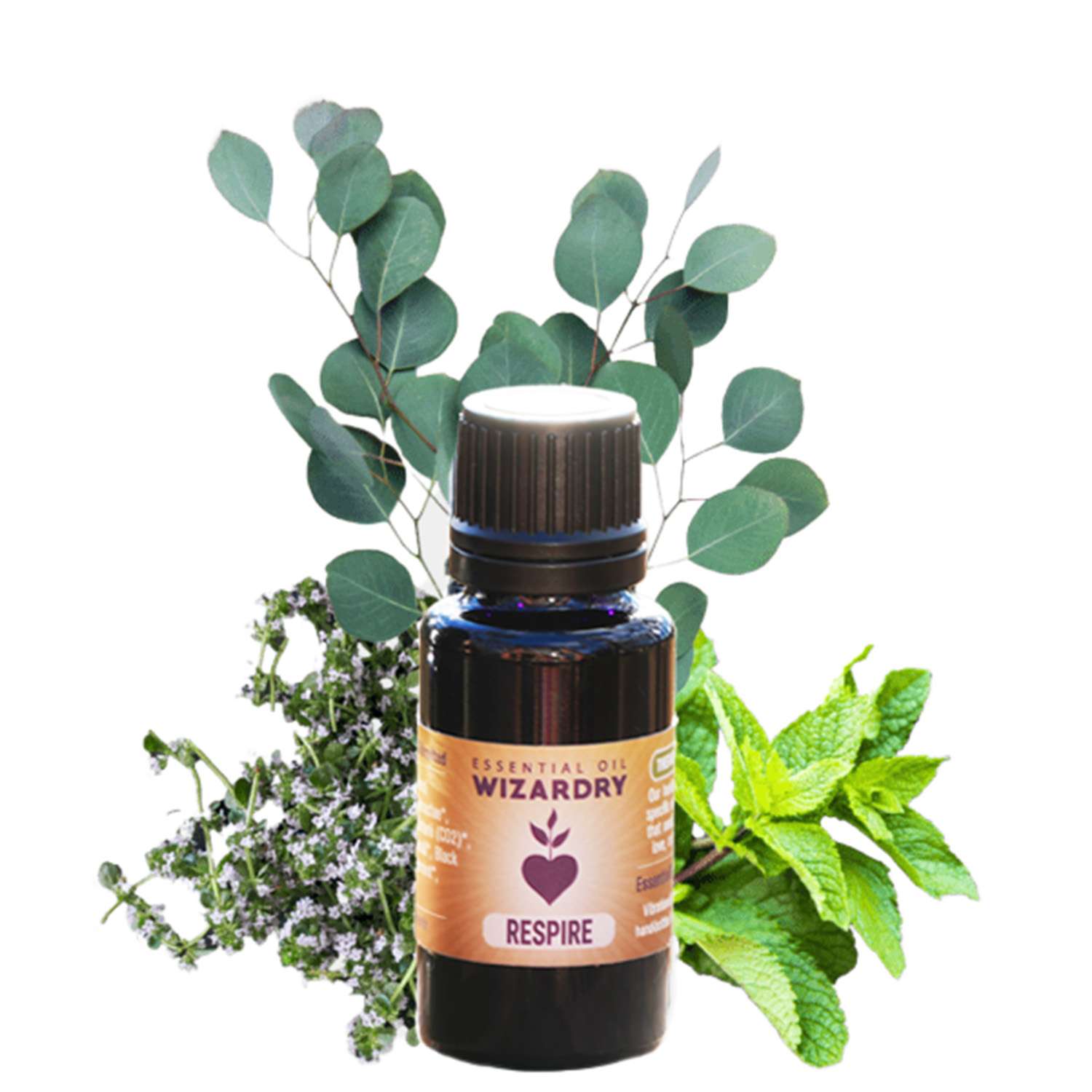
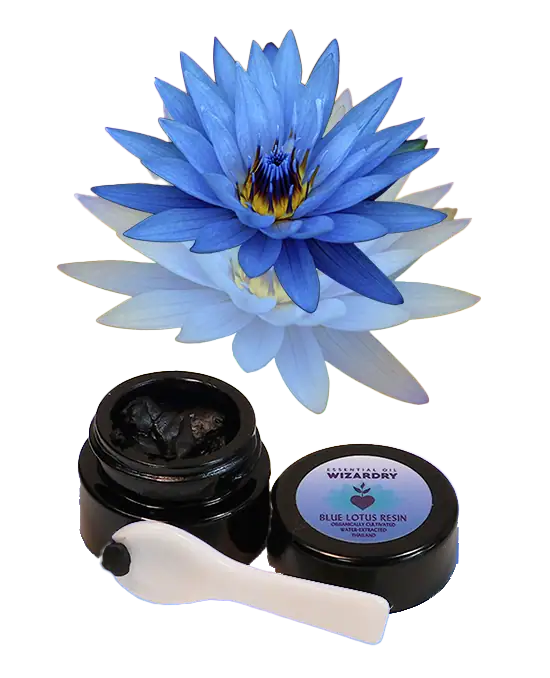
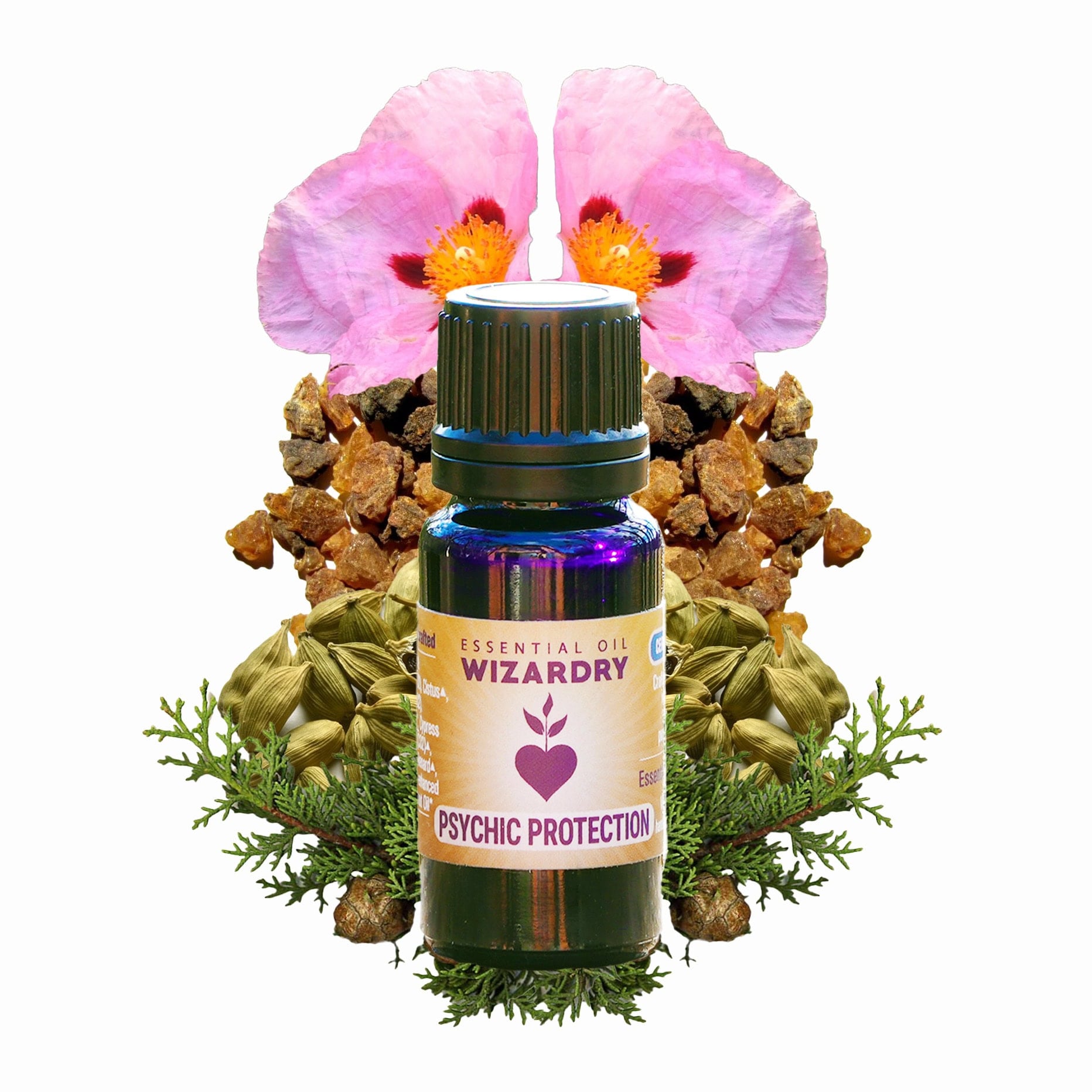



At Essential Oil Wizardry, our Vetiver Oil is sourced from ethical wildcrafters and small artisan distillers who honor the slow, careful extraction this root requires. From there, it is vibrationally enhanced using tools like ORMUS and BioGeometry to bring out its highest expression.
-
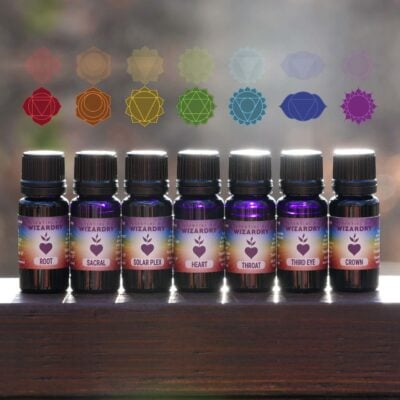
Chakra Oils: Divine-Align Chakra Set
Price range: $170.00 through $349.00 -

CelestTREEal
Price range: $44.00 through $188.00 -

Australian Sandalwood
Price range: $55.00 through $144.00 -
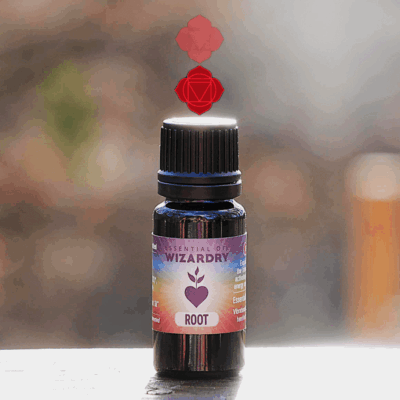
Root
Price range: $25.00 through $123.00 -
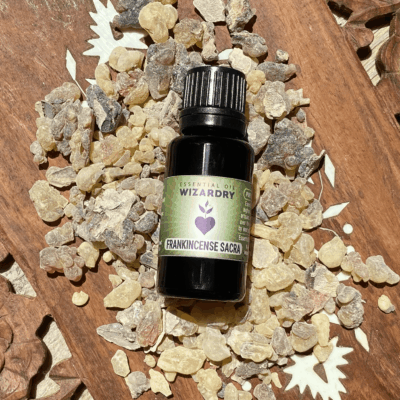
Frankincense Sacra (Royal Frankincense)
Price range: $33.00 through $77.00 -
Palo Santo
Price range: $25.00 through $65.00 -
Vetiver
Price range: $25.00 through $55.00 -
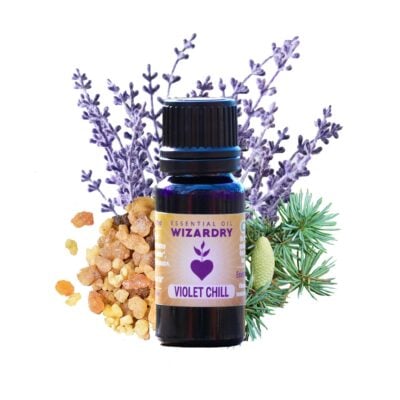
Violet Chill
Price range: $20.00 through $35.00
CHECK OUT OUR BLOG
Blue Lotus Extracts: A Guide To Concentrated Preparations
A guide to blue lotus concentrate in every form, from resin to tincture to absolute, with thoughtful guidance on use and dosing from Essential Oil Wizardry.
Blue Lotus Spiritual Meaning: Ancient Symbolism And Modern Use
A guide to blue lotus spiritual meaning, ancient symbolism, and modern ritual use, with plant-based wisdom and ceremonial insight from Essential Oil Wizardry.
Wild Lettuce Extract: Benefits, Uses, And What To Expect
Learn about wild lettuce extract, its traditional uses, wild lettuce dosing, and how it supports rest, with guidance from Essential Oil Wizardry.
What Is Vetiver Oil Good For?
Vetiver has been used in Ayurvedic medicine and South Asian healing traditions for a very long time. In India, known as khus, woven vetiver root mats were hung in doorways to scent the home. Meanwhile, in the Caribbean, it is called the oil of tranquility. That name has followed it into modern aromatherapy practice, where it remains one of the most consistently reached-for oils for grounding and emotional steadiness. If you’d like to check out another botanical with a time-honored history, we recommend reading about Blue Lotus Oil benefits to see why it was revered by the ancient Egyptians and why it has continued to show up in temple art, sacred offerings, and ceremonial preparations for thousands of years.
Common Vetiver Essential Oil Uses
Beyond its calming reputation, vetiver has traditional uses in skin support, natural perfumery as a fixative and base note, and ceremonial practice. Its extraordinary aromatic persistence, a quality that comes from its dense sesquiterpene composition, makes it one of the most rewarding oils in any serious collection. For more lesser-known plants that reward patient, contemplative use, our collection of the best rare essential oils to collect includes fascinating, multidimensional scents that were tended to with loving hands. And if you’d like more context on how vetiver’s unique profile compares to absolutes and other extraction types, our guide on absolutes vs. essential oils is a useful companion read.
Vetiver’s Aromatic Chemistry And Why It Matters
Vetiver’s complexity comes from over a hundred sesquiterpene derivative compounds. Sesquiterpenes are among the heaviest aromatic molecules, making vetiver one of the slowest-evaporating essential oils and most persistent base notes in natural perfumery. A single application can linger for hours, which is part of what makes it so useful as an aromatic anchor in blends and rituals.
Our Vetiver Oil is steam distilled from organically or wild cultivated Vetiveria zizanoides sourced from Haiti, Indonesia, or Sri Lanka, depending on availability. The oil itself is notably thick; at room temperature, expect a single drop to take 45 to 75 seconds to pour from the orifice reducer. So, you may choose to remove the orifice reducer or enjoy the lesson in patience.
Vetiver Oil For Grounding
Among all the vetiver essential oil benefits, grounding is the one most deeply embedded in traditional use and contemporary aromatherapy alike. The earthy, somatic quality of vetiver’s aroma has a way of directing awareness inward and downward toward the body, the breath, and the present moment.
Earth Connection And Rootedness
For meditators, yoga practitioners, and those engaged in bodywork, vetiver is one of the most useful aromatic companions. Applied diluted to the soles of the feet, base of the spine, and inner ankles before practice, it creates a pleasant aromatic anchor that lasts through extended sessions. However, a dermal maximum of 15% is recommended. For most applications, 1 to 5% in a carrier oil is more than sufficient. To help you create a bridge between highly concentrated botanical extracts and nourishing contact with the skin, our carrier oils for essential oils assortment gives you complementary options that synergize well with vetiver.
Touch Your Inner Sanctum With Stillness: Vetiver Blends
Meanwhile, our Root Chakra Oil features vetiver alongside cedar, davana, myrrh, and spikenard, a formulation Dr. Nick describes as smelling like sweet caramel nectar from the Earth’s core. Apply one to three drops to each foot, then to the lower abdomen or perineum, to inspire you to deepen your connection to yourself. It’s also wonderful when placed in a diffuser, motivating you to find inner peace and ground yourself in the frequency of planet Earth. Further, it makes for an exquisite botanical perfume when worn at the wrists, neck, and body.
The Root Chakra Oil is also available as part of our Divine-Align: Chakra Oils Set, which brings together seven chakra-specific formulations for a complete energetic aromatic practice. It’s a favorite tool among holistic practitioners, healers, and massage therapists.
Vetiver For Anxiety And Sleep: The Botanical Of Tranquility
Vetiver’s traditional designation as the oil of tranquility is not merely poetic. Its sesquiterpene-rich profile has attracted research interest around soothing and sedative effects in animal models, though the human evidence is still developing, and these findings should not be taken as guarantees (Barcellos-Silva et al., 2025). What is well-established is how often people across traditions have reached for vetiver when the body and soul call for anchoring.
Vetiver For Pre-Sleep Support
Namely, its slow-releasing aromatic quality makes it particularly well-suited to the pre-sleep window, when you want something that will persist through the transition into rest rather than evaporating in the first hour. For a calming combination, diffuse one to two drops with frankincense, sandalwood, or palo santo for thirty to forty minutes before sleep. Applied diluted to the sternum, inner wrists, and soles of the feet at bedtime, it may also help create conditions that feel more conducive to settling.
Building A Dependable Practice
Those working with day-to-day anxiety may find vetiver most helpful as a centering daily practice rather than an occasional tool. After all, emotions move through our bodies the same way weather passes through a landscape: arriving without announcement, shifting the quality of the air, and eventually passing through. If you’re looking for botanical motivation to help you move past heavy feelings, our collection ofessential oils for emotional healing may support the emotional dimensions of general stress.
Vetiver In Skin Care And Botanical Perfumery
Vetiver’s applications extend well beyond grounding and sleep. It is a valued ingredient in plant-based skin care, traditionally used to support the appearance of small imperfections. A combination of vetiver with helichrysum, tamanu, and copaiba oil, applied to mild scarring or recent wounds, is a pairing Dr. Nick has tried for skin support. Meanwhile, diluted at 1 to 5% into chemical-free skin or facial products, it brings both aromatic depth and nourishing qualities. One to five drops can also be added to a warm bath for deep relaxation and full-body rejuvenation.
In perfumery, vetiver functions as one of the most valued fixatives and base notes in the natural aromatic world. It anchors brighter, more volatile top notes, slows their evaporation, and adds an earthy gravity that many perfumers consider irreplaceable. Its aroma evolves beautifully over hours on the skin, which is part of why vetiver-based botanical perfumes develop so differently from synthetic fragrances. For those building ceremonial or sacred blends, vetiver pairs delightfully with palo santo and frankincense sacra.
Frequently Asked Questions About Vetiver Essential Oil Benefits
What is vetiver oil good for in daily practice?
Vetiver is most commonly used for grounding and sleep. Applied diluted to the soles of the feet, sternum, and inner wrists, or diffused during evening rituals, it creates a deeply settling aromatic experience and works as an anchor in meditation and yoga practice. Children tend to find this earthy aroma grounding & calming.
How do you use vetiver essential oil?
Vetiver can be diffused at one to two drops with frankincense, palo santo, or sandalwood. Alternatively, it can be diluted at 1 to 5% in a carrier oil for topical massage or skin care. Additionally, a few drops on the soles of the feet before sleep is a traditional application worth returning to. Please keep in mind that vetiver is too thick to diffuse effectively on its own and works best blended.
Is vetiver oil helpful for sleep?
Vetiver has been traditionally used for sleep support across multiple cultures. Some research has examined its sesquiterpene constituents for potential calming effects, though the human evidence is still developing.
What does vetiver essential oil smell like?
Vetiver has a deep, smoky, earthy, resinous aroma with woody and slightly sweet undertones, often described as the smell of living soil or rain-soaked earth. Its aroma is long-lasting and evolves over several hours when worn as a natural perfume base.
How does vetiver oil support grounding?
Vetiver’s dense, earthy aromatic character has a somatic quality that tends to direct awareness toward the body and the present moment. Applied to the soles of the feet, base of the spine, and inner ankles, it creates a persistent aromatic anchor that many practitioners find genuinely supportive during meditation, yoga, or grounding practice.
How should I store vetiver essential oil?
Store vetiver sealed in a cool, dark cabinet away from heat and light, best used within 2 to 5 years of purchase.
Are there any precautions with vetiver essential oil?
A dermal maximum of 15% is advised, and it’s best to avoid use during pregnancy. As with all essential oils, dilute before topical application and patch test if you have sensitive skin.
DISCLAIMER:
The information provided is intended for educational and informational purposes only and reflects historical, cultural, and experiential perspectives. It is not intended to diagnose, treat, cure, or prevent any disease, nor should it be interpreted as medical, legal, or professional advice. Individual experiences may vary. Always use personal discernment and consult a qualified professional when appropriate.
Sources:
- Barcellos-Silva, I. G. C., Dos Santos, F. K. F., Kharkwal, H., Chander, S., Kharkwal, A. C., Awasthi, R., Dhiman, N., Sharma, B., Kulkarni, G. T., Larssen, H., Silva, J. M. L., Souza, M. A., Setzer, W. N., & Veiga-Junior, V. F. (2025). Vetiver, Vetiveria zizanioides (L.) Nash: Biotechnology, Biorefineries, and the Production of Volatile Phytochemicals. Plants (Basel, Switzerland), 14(10), 1435. https://doi.org/10.3390/plants14101435