


Key Takeaways
- A Plant With A Distinct Botanical Identity: Nymphaea caerulea is a specific species of water lily with a well-documented history of ceremonial, aromatic, and personal care use across ancient cultures.
- Botanical Knowledge Deepens Practice: Understanding the plant’s origins, growth habits, and constituent profile gives you a richer foundation for working with it intentionally.
- Many Pathways Into The Same Flower: From blue lotus extracts to aromatic oil preparations, Nymphaea caerulea is available in forms that suit a wide range of practices and intentions.
Behind every common name is a botanical identity, and for blue lotus, that identity is Nymphaea caerulea. Knowing the plant by its full name opens a different kind of relationship with it, one rooted in specificity, curiosity, and a genuine appreciation for what makes this water lily distinct from the many other plants that share the word “lotus” in their common names.
At Essential Oil Wizardry, we believe that knowing a plant well is part of working with it well. Founded by a holistic-minded, retired pharmacist, our approach to botanicals has always been grounded in both traditional wisdom and a genuine respect for the science and history behind each preparation we carry. More than 95% of what we offer is organic or wildcrafted, unsprayed, and vibrationally enhanced using energetic tools, ORMUS, and BioGeometry.
In this article, we will discuss the botanical profile of Nymphaea caerulea, its historical and cultural context, its aromatic character, and the range of preparations available for those wanting to bring this remarkable plant into their own practice.
The Botanical Profile Of Nymphaea Caerulea
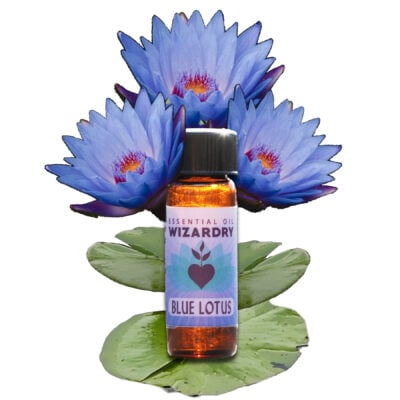
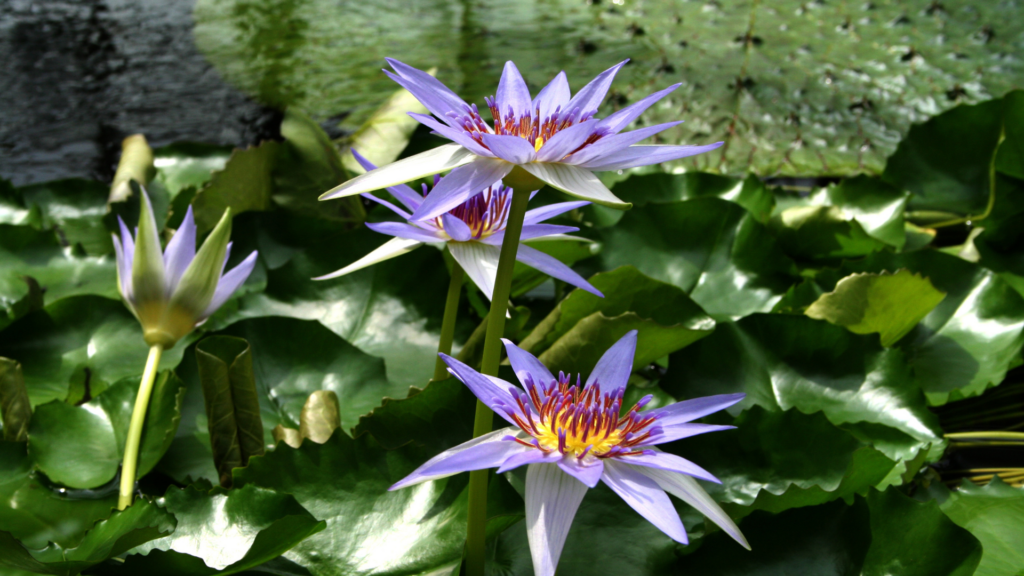
Nymphaea caerulea belongs to the family Nymphaeaceae and is native to the Nile Delta and parts of East Africa. It is an aquatic perennial that thrives in shallow, calm waters, producing striking violet-blue flowers that open with the morning sun and close again at dusk. This daily rhythm, so visually distinct and consistent, gave the plant much of its early symbolic significance across ancient cultures.
The plant is sometimes confused with other lotus species, most notably Nelumbo nucifera, the pink or white lotus more commonly associated with Buddhist iconography. Nymphaea caerulea is a different plant entirely, with its own distinct aromatic profile, constituent chemistry, and cultural lineage. For those new to the plant, our broader introduction at what is blue lotus offers a helpful starting point alongside this more botanically focused guide.
What Makes Nymphaea Caerulea Botanically Distinctive
This flower has a scent you will never forget. It breathes with honey-sweet, apple pie notes, light floral layers, and a soft, watery clarity. It feels entirely unique, both simple and deeply complex all at once.
Inside the petals live gentle compounds that naturally invite calm and help you feel present in the moment. Depending on how the flower is extracted, these natural elements shift and evolve, revealing different layers of its soothing magick.
Blue Lotus Flower In History And Culture
The blue lotus flower has one of the most thoroughly documented cultural histories of any botanical. In ancient Egypt, Nymphaea caerulea was woven into every dimension of religious, ceremonial, and daily life. It appeared in tomb paintings, temple reliefs, papyri, and ritual vessels, consistently associated with renewal, the solar cycle, and the unfolding of consciousness.
Its presence in these contexts was not incidental. The ancient Egyptians understood plants as living carriers of meaning, and blue lotus was among the most symbolically rich of all. Its blue lotus spiritual meaning centered on the ideas of rebirth and receptive awareness, qualities that continue to resonate in modern ritual and contemplative practice.
Nymphaea Caerulea Beyond Egypt
Ancient Egypt holds the deepest roots for this plant, but Nymphaea caerulea also blossomed in ceremonies across ancient Asia. Everywhere it traveled, people met it with the same gentle intention. It was welcomed as a companion for reflection, quiet ceremony, and inner openness, never for intensity or noise. This shared thread across time reveals something truly timeless about the plant’s calming spirit.

Blue Lotus Oil Benefits And Available Preparations
Nymphaea caerulea is available in a range of prepared forms, each of which captures a different dimension of the plant’s character. Understanding the options helps you choose the preparation that best suits your intentions and practice.
Here is an overview of the main preparation types:
- Dried flower: The most accessible and versatile raw form, suitable for tea, infusion, bath preparations, and altar use. Our Blue Lotus Flower is sourced with the same integrity we bring to everything we carry. Grown organically in a wild blue lotus pond stewarded by a Thai family.
- Essential oil and absolute: Aromatic preparations that carry the plant’s honey-sweet, floral character for use in diffusion, natural perfumery, and ritual aromatic practice. Our article on blue lotus oil benefits covers these in detail. An authentic essential oil is very uncommon, as distillation can destroy the delicate aromatic molecules of the blue lotus; the absolute extract is often misidentified as “blue lotus oil”.
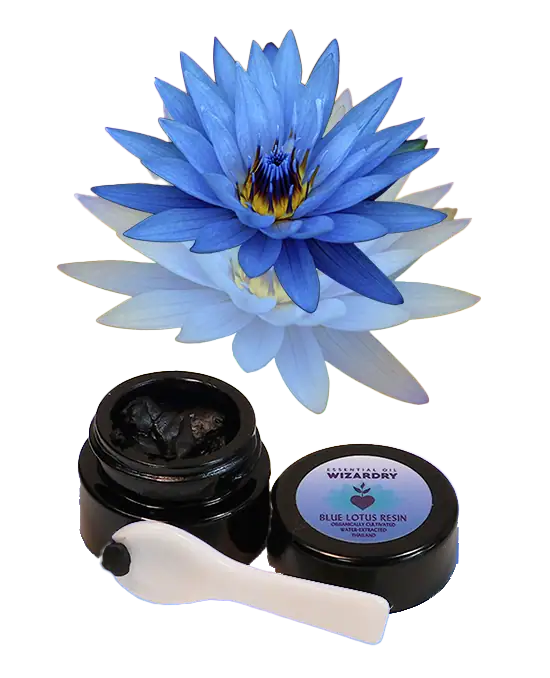
- Tincture and resin: Concentrated ingestible preparations for those who have built familiarity with the plant and want to work with a more potent expression of its character.
- CO2 and other extracts: More specialized preparations that capture a broader constituent profile than steam distillation alone.
Our full Blue Lotus Extracts collection reflects this range, offering multiple pathways into the same remarkable plant.
Sourcing And Quality: What To Look For In Nymphaea Caerulea Preparations
The quality of any blue lotus preparation depends entirely on the quality of the plant it comes from and the care taken throughout the extraction and preparation process. Nymphaea caerulea grown in its native habitat, harvested at the right time, and processed without shortcuts carries a character that inferior sourcing simply cannot replicate.
At Essential Oil Wizardry, we source our blue lotus through long-term relationships with growers and producers who share our values around integrity and sustainability. Every product is unsprayed, free from pesticide residues, and vibrationally enhanced to honor both the plant and the person receiving it. Our products are best used within 2 to 5 years and stored away from heat, light, and air.
Final Thoughts
Nymphaea caerulea is a plant that rewards those who take the time to know it. Its botanical identity, its history, its aromatic character, and its range of available preparations all offer entry points into a relationship that can deepen considerably over time. At Essential Oil Wizardry, we carry this plant with genuine respect for everything it represents and everything it has offered people across millennia.
Frequently Asked Questions About Nymphaea Caerulea
What is Nymphaea caerulea?
Nymphaea caerulea is the botanical name for blue lotus, a water lily native to the Nile Delta and parts of East Africa. It is distinct from other plants commonly called lotus and has its own unique aromatic profile, constituent chemistry, and cultural history.
Is Nymphaea caerulea the same as the sacred lotus?
No. The sacred lotus most commonly associated with Buddhist iconography is Nelumbo nucifera, a different plant entirely. Nymphaea caerulea is a blue water lily with its own distinct identity, history, and aromatic character.
Where does Nymphaea caerulea grow naturally?
Nymphaea caerulea is native to the Nile Delta and parts of East Africa, where it grows in shallow, calm freshwater environments. It has also been cultivated in other warm regions for ceremonial and ornamental purposes. Dr. Nick has seen it thrive in parts of Thailand, Indonesia, and it grows well in Sri-Lanka.
What preparations are available from Nymphaea caerulea?
The plant is available as dried flower, essential oil, absolute, tincture, resin, and various extracts. Each preparation captures a different dimension of the plant’s character and suits different intentions and practices.
How should Nymphaea caerulea preparations be stored?
All preparations should be stored in dark glass containers away from heat, light, and air. Proper storage preserves their aromatic and botanical integrity. Most are best used within 2 to 5 years of purchase.
Why is sourcing important for Nymphaea caerulea?
The quality of blue lotus preparations depends directly on the quality of the plant material and the care taken throughout processing. Organically grown, properly harvested, and carefully prepared blue lotus carries a character that lower-quality sourcing cannot replicate. Perhaps more importantly, most products sold as blue lotus oil on the market are, unfortunately, cheap, adulterated synthetic fragrance blends. Many products sold on the market as blue lotus are not what they are listed as, and many of these vendors do not know, due to a lack of knowledge and experience.
DISCLAIMER:
The information provided is intended for educational and informational purposes only and reflects historical, cultural, and experiential perspectives. It is not intended to diagnose, treat, cure, or prevent any disease, nor should it be interpreted as medical, legal, or professional advice. Individual experiences may vary. Always use personal discernment and consult a qualified professional when appropriate.
Sources:
- Manniche, L. (1989). An Ancient Egyptian Herbal. University of Texas Press.
- Samy, R. P., et al. (2008). Ethnobotany and phytopharmacology of Nymphaea species. Journal of Ethnopharmacology.
- Tisserand, R., & Young, R. (2014). Essential Oil Safety: A Guide for Health Care Professionals (2nd ed.). Churchill Livingstone.