


Key Takeaways
- Same Flower, Usually The Same Bottle: In most cases, “blue lotus oil” and “blue lotus absolute” describe the very same preparation. Blue Lotus does not yield a true essential oil through steam distillation, so what’s sold as “oil” is either the absolute under a more familiar name, or it isn’t authentic blue lotus at all.
- Authenticity Matters More Than Terminology: Because genuine blue lotus extract is rare and costly to produce, a large share of what’s marketed online as “blue lotus oil” is synthetic fragrance rather than a true botanical extract.
- Knowing What You’re Buying Deepens Practice: Understanding how blue lotus is actually extracted, and how to spot the difference between genuine and synthetic, helps you choose with confidence. Synthetic blue lotus should not be ingested and may also disrupt the body’s natural hormones.
Search for “blue lotus oil” and you’ll find bottles labeled that way alongside others labeled “blue lotus absolute.” It’s natural to assume these are two different preparations, made through two different processes. In most cases, they’re not. They’re the same extract, wearing two different names — and knowing why matters, because it’s also the key to telling a genuine blue lotus product from an imitation.
At Essential Oil Wizardry, more than 95% of what we carry is organic or wildcrafted, unsprayed, and free from pesticide residues. We vibrationally enhance every preparation using energetic tools, ORMUS, and BioGeometry. Dr. Nick has personally tasted and tested dozens of blue lotus batches from different producers over the years, which is part of why we’re comfortable being direct about what’s actually out there on the wider market.
In this article, we’ll explain why blue lotus doesn’t have a true essential oil in the traditional sense, how the absolute is actually made, and how to tell a genuine “blue lotus oil” from a synthetic one.
Why There’s No True Blue Lotus Essential Oil
Most essential oils are produced through steam distillation: steam passes through plant material, carrying volatile aromatic compounds with it, which are then condensed back into liquid form. This works beautifully for many plants. It does not work for blue lotus.
Blue lotus’s aromatic molecules are delicate. The heat and pressure of steam distillation breaks them down before they can be captured, rather than preserving them. This is the same reason a handful of other prized florals — jasmine among them — are never true steam-distilled essential oils either. For a broader look at why certain flowers require a gentler process, our guide on absolutes vs essential oils covers the topic in practical detail.
How Blue Lotus Absolute Is Actually Made
Because steam distillation isn’t an option, blue lotus is instead solvent extracted to produce an absolute. This gentler process draws aromatic compounds from the flower without heat, capturing a broader spectrum of the plant’s chemistry, including heavier, more delicate molecules that distillation would destroy. The result is a richer, denser preparation with a more complex, true-to-flower aroma than a distilled oil could ever achieve.
It’s also an intensely concentrated preparation: it takes roughly a pound of blue lotus flowers to yield a single milliliter of absolute. That ratio is a big part of why genuine blue lotus absolute carries a real financial cost, and why that cost matters when you’re evaluating what’s for sale as “blue lotus oil.”
What “Blue Lotus Oil” Usually Means When You See It For Sale
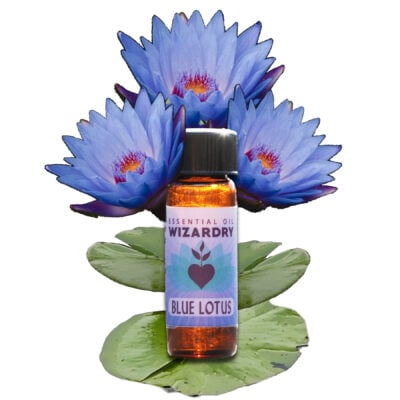
When a “blue lotus oil” is genuine, it’s almost always this same absolute or a CO2 extract, sold under the more familiar search term shoppers tend to use. That’s true here as well — our own blue lotus oil benefits guide walks through exactly what’s in the bottle when you shop our absolute, along with the fuller range of forms we offer.
There are a handful of rare, small-scale artisan methods that attempt to distill an oil from the solvent-extracted material itself, rather than from the raw flower. These exist, but they aren’t available at any real commercial scale, and they’re not what you’ll encounter shopping online.
What you will encounter is a lot of synthetic fragrance sold under the “blue lotus oil” name. Genuine, unadulterated blue lotus is genuinely hard to come by, and most “blue lotus oil” on the broader market is fragrance oil rather than a true botanical extract.
How To Tell If A “Blue Lotus Oil” Is Genuine
A few practical markers can help you evaluate any blue lotus oil or absolute before you buy:
- Price. Authentic blue lotus absolute typically runs around $10–$20+ per milliliter at the manufacturer level for production. At wholesale, blue lotus absolute or CO2 can cost importers and distributors between $20 – $50 / mL, depending on source, availability, quality, and country of origin. If a retail listing prices “blue lotus oil” under $60 / mL, it’s almost certainly synthetic or heavily adulterated — the math simply doesn’t work otherwise. Purchased in multiple mL or bulk quantity, Blue Lotus Absolute may be available for retail or wholesale users typically between $30 – 60+ / mL.
- Color. Genuine blue lotus absolute is a deep golden-amber, not a vivid or neon blue. A bright blue color is a strong sign of added dye.
- Aroma. Real blue lotus carries a complex, earthy, floral scent with a hint of spice. Some batches have a creamy, vanilla, honeyed apple pie aroma. Other batches have a unique sweet, exotic, floral aroma with a slight dieselic undertone. If it smells like bubblegum, laundry detergent, or a sharp chemical perfume, it isn’t the real thing.
- The scent strip test. Perfumers sometimes dip a scent strip in the oil and let it sit on a desk for a few hours to a few days. Authentic botanical extracts evolve and mellow gracefully over that time. Synthetic versions tend to reveal a persistent and sharp chemical base note as the natural-smelling top notes fade.
- Testing documentation. Reputable sellers are able to provide GC/MS (Gas Chromatography-Mass Spectrometry) test reports confirming no synthetic diluents are present.
The Aromatic Character Of Genuine Blue Lotus Absolute
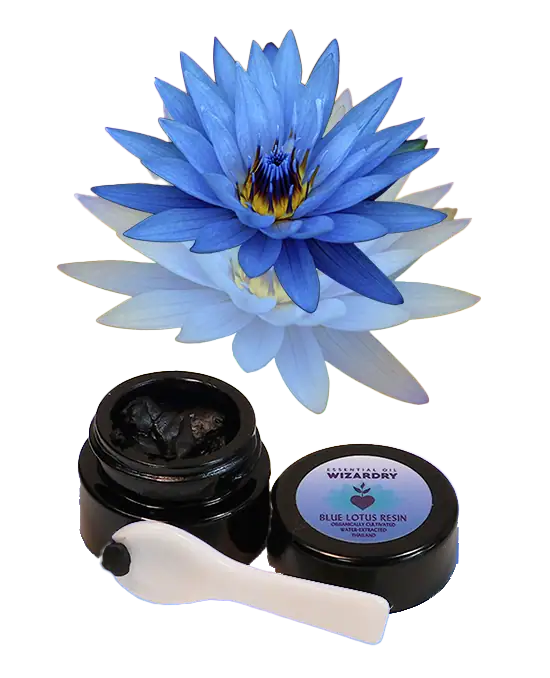
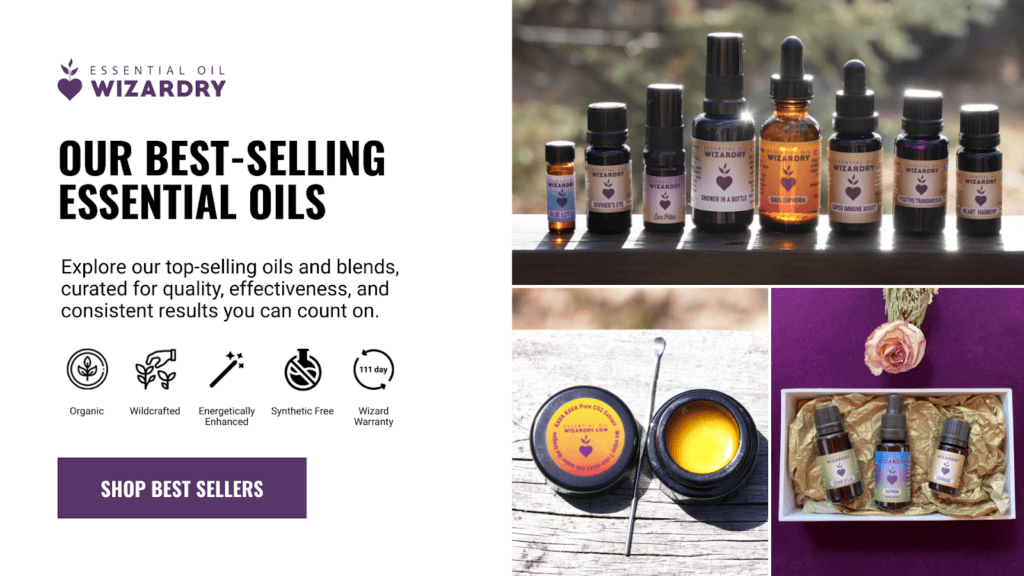
A true blue lotus absolute is honey-sweet, richly floral, and layered, with notes that can evoke vanilla and warm baked spice. It’s thick in texture, deep golden-amber in color, and unfolds gradually rather than announcing itself all at once. Because of its concentration, a very small amount goes a long way, and it tends to linger, making it well-suited to natural perfumery and skin-contact ritual use.
Because of its solvent extraction process, blue lotus absolute is generally better suited to topical and aromatic use than to ingestion.
Choosing The Right Blue Lotus Preparation For Your Practice
Once you’ve confirmed you’re working with something genuine, the real question is which form of blue lotus fits your practice.
A few guiding questions can help:
- Are you primarily interested in perfumery and skin-contact ritual applications, or are you looking for something to take internally?
- Do you want an intensely concentrated aromatic experience, or something gentler for everyday use?
- Are you drawn to blue lotus as a ceremonial companion, a flavor experience, or both?
- Are you newer to blue lotus and looking for an accessible entry point, or ready for something more concentrated?
If perfumery, anointing, and skin-close aromatic depth are what you’re after, the absolute is the natural choice. If you’re looking for something to take internally as part of ritual or daily practice, our resin, tincture, and honey preparations are built for that. Our full Blue Lotus Extracts collection and our Blue Lotus Tincture round out the broader range of preparations available for those exploring every dimension of this plant.
Final Thoughts
“Blue lotus oil” and “blue lotus absolute” tell the story of the same rare flower, more often than not from the same bottle. The real distinction worth caring about isn’t between two extraction methods — it’s between authentic and imitation. At Essential Oil Wizardry, we source direct from a single, verified blue lotus pond in Thailand and offer the plant across its full range of authentic forms, precisely because so much of what’s sold under the blue lotus name elsewhere isn’t the real thing.
In summary, blue lotus oil is produced and extracted from blue water lily flowers (Nymphaea caerulea) either as a solvent-extracted absolute or a CO2 extract. So to confuse things more, blue lotus oil is actually extracted not from a lotus, but the fabled blue water lily, which has a history dating back to ancient Egyptian periods!
Our products are best used within 2 to 5 years and stored away from heat, light, and air.
Frequently Asked Questions About Blue Lotus Oil
What is the difference between blue lotus oil and blue lotus absolute?
In most cases, there isn’t one. Blue lotus does not yield a true essential oil through steam distillation, so genuine “blue lotus oil” is almost always the absolute, solvent-extracted and sold under the more commonly searched “oil” name.
Is blue lotus absolute safe to use in a diffuser?
Blue lotus absolute is thick and concentrated, which makes it less compatible with standard ultrasonic or nebulizing diffusers. It’s better suited to personal perfume oils, skin-contact blends, and anointing, where its full aromatic character can unfold gradually. It will need to be greatly diluted with other oils in order to effectively diffuse.
Can blue lotus absolute be ingested?
Blue lotus absolute is generally not recommended for ingestion due to the solvent extraction process involved in its production. However, rose absolute produced under a similar solvent extraction process is deemed safe as a flavoring agent at the right concentration by the FDA on the GRAS list. For ingestible blue lotus preparations, our tincture, resin, and honey are formulated for that purpose.
How does blue lotus absolute compare in scent to the living flower?
Blue lotus absolute tends to smell closer to the living flower than a distilled oil ever could, since solvent extraction captures a broader range of aromatic molecules, including heavier, more delicate compounds that heat-based extraction destroys.
How can I tell if the “blue lotus oil” I bought is authentic?
Check the color (deep golden-amber, not neon blue), the aroma (complex and earthy-floral, not bubblegum or chemical), and the price (true absolute rarely sells below roughly $60/mL at retail). Reputable sellers can also provide GC/MS testing documentation.
How should blue lotus absolute be stored?
Store it in a dark glass bottle away from heat, light, and air to preserve its aromatic integrity. Our products are best used within 2 to 5 years of purchase.
DISCLAIMER:
The information provided is intended for educational and informational purposes only and reflects historical, cultural, and experiential perspectives. It is not intended to diagnose, treat, cure, or prevent any disease, nor should it be interpreted as medical, legal, or professional advice. Individual experiences may vary. Always use personal discernment and consult a qualified professional when appropriate.
Sources:
- Sell, C. S. (2006). The Chemistry of Fragrances: From Perfumer to Consumer. Royal Society of Chemistry.
- Tisserand, R., & Young, R. (2014). Essential Oil Safety: A Guide for Health Care Professionals (2nd ed.). Churchill Livingstone.
- Samy, R. P., et al. (2008). Ethnobotany and phytopharmacology of Nymphaea species. Journal of Ethnopharmacology.